Balade patrimoniale#5 SAMEDI 30/04 : Belsunce-Noailles, dans les coulisses du centre ville

A Marseille, le thème des migrations est enraciné dans la construction de la ville et l’histoire de son port. Arrivés il y a peu ou nés ici d’une histoire familiale commencée ailleurs, Mohamed, Steeve, Ézéquiel, ou Paola vous font partager leurs liens avec l’histoire des migrations pour avoir un regard singulier sur la ville.

Ils vous invitent à une traversée de Belsunce-Noailles, des quartiers populaires du centre-ville à la rencontre des habitants et commerçants qui, par leurs récits de vie ou de quartiers, nous content l’histoire de migrations. Des lieux façonnés par ces « passagers » d’un jour ou de toujours, une place apparue au fil du temps par l’usage, des statues d’une époque coloniale dont les traces ont du mal à disparaître, des musiques du monde produites-là qui ont tracé les sillons du Musical, du jazz ou du rap.
Une invitation à la découverte des coulisses de Marseille.

Balade conçue dans le cadre du projet européen Migrantour, porté à Marseille par l’association Marco Polo, entre plusieurs villes d’Europe consistant à (re)découvrir la ville à partir du regard et des récits d’habitants-migrants.

Inscriptions ici

Balade patrimoniale #4 ce mercredi : L’Estaque : son patrimoine industriel et culturel

Une grande boucle pédestre à travers l’Estaque proposée par Gérard Planchenault, Vincent Fraschina et Agnès de la colline.

Marchez à la découverte de son histoire industrielle (tuileries, cimenterie, industries chimiques), de son patrimoine culturel (de Cézanne à l’invention du cubisme de Braque et Duffy), et de son rôle de précurseur dans l’archéologie sous-marine (du Cdt Cousteau à la COMEX et au DRASSM).

Après un pique-nique (tiré du sac) collectif pour ceux qui le souhaitent, la balade se poursuit par une visite d’1h30 autour du plus grand sous-marin civil du monde, le SAGA : histoire des machines à plonger – film – expo photos – visite vidéo intérieure.

Type de balade : Patrimoniale.
Thématique(s) ou notions abordée(s) : Patrimoine industriel, Histoire de l’art, Archéologie sous-marine, Sous-Marin.
Sites, monuments, lieux visités : Ruelles, courées, bureaux de la Coloniale, ancien site de la Comex.
Secteur géographique : Littoral. Marseille 16e

Inscription là.

Communiqué des copains : « SCOP TI à la TV ! à revoir sur france4 »

Société Coopérative Ouvrière Provençale de Thés et Infusions


Bonjour à tous,

Nous vous invitons à découvrir, à partir du lien ci-dessous, un petit reportage sur le thé, réalisé et diffusé dans le cadre de l’émission « On n’est plus des pigeons », sur France 4, lundi 29 février.

Le reportage s’intitule : « Le thé, comment bien le choisir ? ».

Présentation du sujet en début d’émission. Début du reportage (58 :42) :

http://www.france4.fr/emissions/on-n-est-plus-des-pigeons/diffusions/29-02-2016_461897

Au cours de l’émission, qui se veut très didactique avec une portée éducative à l’attention des « pigeons », que sont les consommateurs non-avertis, une journaliste d’investigation s’est livrée à une enquête sur la qualité des thés proposés dans la grande distribution à partir de critères d’analyse permettant de distinguer les produits présents en magasin.


Source Twitter : On n’est plus des pigeons.

Il apparait pour cela nécessaire de faire le tri parmi les recettes affichées et la présentation des ingrédients qui composent chacun des produits (l’Origine du thé : Chine, Inde, etc. ; les Variétés de thé : Darjeeling, Sri Lanka, Assam etc. ; la Nature du thé : thé vert, thé noir -obtenu par procédés d’oxydation-, etc. ; la Qualité du thé : thé nature, thé aromatisé). On découvre que la communication des ingrédients, le langage employé, la tournure des énoncés s’avèrent très trompeurs pour le consommateur, voire au contraire très instructifs dans la mesure où ce « double-discours » est motivé par une recherche de profit réalisée par le fabricant. La présence d’arômes doit ainsi être l’objet d’une lecture attentive dans la description des recettes, selon que l’on parle « d’arôme naturel » ou simplement d’une présence d’« arômes » dans les recettes confectionnées. L’absence du qualificatif « naturel » associé au terme arôme signifie qu’il s’agit d’une solution chimique ou synthétique de substitution.

Au cours de cette enquête, visant à déjouer les pièges de cette communication abusive et identifier les bons produits, accessibles au plus grand nombre, la gamme « 1336 » s’est particulièrement distinguée sur le marché de la grande distribution. Il semble que le travail réalisé à SCOP-TI, depuis un an désormais, s’inscrivant dans une recherche de qualité, de transparence et de respect du consommateur, soit reconnu et il est bon de le faire savoir !     A regarder sans modération et diffuser largement autour de vous !!!

noname


Et pour ceux qui ne l’aurait pas vu… Nous vous invitons à revoir le reportage diffusé au cours du Journal de 13 heures, sur France 2, samedi 5 mars 2016, consacré à Gaston et Suzanne STEMPF, un couple d’amis retraités qui vit en Alsace et nous soutient depuis des années :

http://www.francetvinfo.fr/societe/je-donne-donc-je-suis-quand-des-particuliers-s-entraident-financierement_1346317.html

The cooperative process H2H in narrative

Chapter 1: The first steps. The story we tell you takes us to the north of Marseille in the middle of the years 80 where we find Christine Breton, curator of the heritage freshly assigned to this sector. To her surprise, she found no monuments, sites or cultural aspects classified or listed in the National heritage. Difficult to conceive for this curator, she chooses to lace her shoes and to survey the northern districts of Marseille in search of heritage elements. The northern districts of Marseille are located on the waterfront without having access to them. The immense industrial port of Marseille stands as a wall and prevents anyone from reaching the sea by land. For almost 200 years this area of Marseille has been dedicated to trade. As a result, many economic activities have taken place there, and that says economic activities said workers and says workers called populations of inhabitants. Diverse populations that have succeeded, piled up and blended according to history. But back to our curator of heritage: by classifying and listing the heritage of this sector, she found herself faced with new problems for her. She spotted some heritage that nobody wanted to talk about, which people were ashamed of. It also discovered heritage that different populations interpreted differently. Issues that have questioned her about her work and the very notion of what is heritage for a people, for a community. It was at this point in history that she turned to the Council of Europe to find help. Chapter 2: A common framework. The second chapter of this story makes us change our scale and time. We find ourselves in the post-war period, in a partially ruined Europe. The war has made colossal damage, so that the women and men still present feel the need to unite around humanistic principles. We are at the beginning of the European Community. In 1949, the Council of Europe was established. This Council is an intergovernmental organisation which now brings together 47 countries, which is more than the 28 member states of the Union. To them all they represent more than 800 million citizens in this independent grouping of the European Union. The Council of Europe is the main organisation for the defence of human rights, democracy and the rule of law. It is committed to defending these rights and providing a common framework to facilitate their application. For example, the Council of Europe intervened at the time of the breakup of Yugoslavia. At that time, the various communities disputed the ownership of sites, monuments or cultural aspects; Each claiming it as part of its heritage. The Council of Europe has made it possible to bring together representatives of these communities around the same table and thus to have allowed the dialogue between these peoples. At these meetings, everyone was able to measure the legitimacy of the other to claim a link with this heritage aspect. At these meetings, everyone was able to realize that through this heritage aspect, they all had a piece of common history and that they were not so opposed to each other. From this work, some tensions have managed to be appeased. These heritage aspects have been preserved, valued and passed on to future generations. They could also be used as a resource for the economic and social development of the regions concerned. All this work of the Council of Europe on issues of heritage and cultural aspects culminated in the drafting of the Faro Convention in 2005. This Convention is premised on the idea that the knowledge and practice of heritage falls within the citizen's right to participate in cultural life as defined in the Universal Declaration of Human Rights. This text presents cultural heritage as a resource that serves both human development, the valorisation of cultural diversities and the promotion of intercultural dialogue, as well as a model of economic development according to the principles Sustainable use of resources. The Faro Convention is the first of two pillars of this history that aims to enforce the principles as widely as possible. Chapter 3: And the forest pushed. The third chapter of this book makes us return to the north of Marseille in a more contemporary era. By walking shoes to the feet of these quarters, the curator of Heritage Christine Breton has emulated them. Several formal or informal collectives have been structured and have taken over the Faro Convention as a tool for economic development and the strengthening of democracy in their territory. In 2009, the district mayor adopted the principles of the Faro Convention for the northern districts of the city and brought these people together in a heritage Commission. In 2010, a large proportion of these collectives grouped together into a cooperative of economically-active inhabitants called Hotel du Nord. The purpose of this co-operative is to offer hospitality or non-market offers. These offers are available in four brands. "Hosted by": Accommodation in a guest room or in a bed and breakfast. "Discovered with": walks built collectively by the inhabitants, by the economic, institutional and associative actors of the territory to discover their visions and their practices. "Produced by": Workshop visits of artisans, artists or industrial factory (such as traditional Marseille soaps) and the valorisation of these local productions by their resale to passengers in accommodation. "Written by": Works of historians or works that bring together cultural contents, collections of inhabitants and archives brought to light by the work of collecting and researching the actors of this territory, particularly during the creation of the walks. Hotel du Nord offers these offers of hospitality to all the passengers of the territory. This is an important point in this story because a territory is not confined to the mere passage of tourists; Many people come for other reasons: accompaniment of an inpatient, professional displacement or participation of researchers in a seminar. They can also come for their studies, to prepare for their future installation in this new city and for many other reasons. For this reason, the North Hotel worked among other things with hospitals, companies and universities to build offers of hospitality adapted to these passengers. To the extent that the co-operative receives only 40% of these passengers for tourist reasons, the remaining 60% have other visiting grounds. They meet the real needs of the territory in terms of hospitality. Northern Hotel has managed its bet to bring people to the northern districts of Marseille when many promised them failure. Since their creation they have welcomed more than 10 000 passengers in stays and walks. They generate 120 000 € of direct annual economic spin-offs on the northern districts. They have managed to build forms of organization that allow collective work to develop the activity of each. They have managed to develop "social" projects that build on this economic activity by, for example, participating in the projects of young people from these sensitive neighbourhoods who have been trained in the profession of accompanying guide by professionals of Departmental Hiking committee. Chapter 4: the plot. The story is beautiful but life is never without a bad surprise and Chapter 4 comes to Project a shadow on this narrative bringing her intrigue. Since 2012, the tourism and commercial accommodation industry has been operating a major turning-point begun a few years earlier. The platforms of the privately owned collaborative economy follow the online booking sites and disrupt user practices. They provide a high-performance technical solution but concentrate most of the reservations on a few market places and exacerbate the competition between the players in the same territory. Hotel members of the North who sell their offers via these channels are obliged to transfer 15-20% of their selling price to the sites that bring them this marketing service instead of giving them back to the Co-op and allowing Hotel du Nord to contribute To the development and animation of their territory. In search of the solution, the Northern Hotel turned outward and looked for partners with whom to associate in order to give another scale to their project. Because the Marseille scale was not enough to generate enough flow on their reservation site and thus sufficient economic benefits to the cooperative to develop more activities. It was at this point in history that the Ekitour Association entered the dance. This association based in Poitiers has a tour operator activity in the social and solidarity tourism. The meeting of these two bodies was made at a general meeting of the Minga Association which itself is a federation of professional actors and citizens engaged in the production of a local and high quality economy Like International. Well aware of developments in the field of tourism, Ekitour has welcomed this initiative with great interest. It is the same for Minga who sees his members artisans, independents and citizens suffer in the face of the striking force of these large market places and which remove the adherents from the ownership of their work tool. The questions of the rule of law, the protection of the working tool and access to holidays, leisure and culture for all were at the centre of the debate. To achieve this, these three structures have decided to create a Euro-Mediterranean platform for accessing hospitality offers defending the general interest and common goods. Ekitour, northern Hotel and Minga have therefore chosen to cooperate to create this platform and this is the second pillar of this story: The Co-operative framework. What is the good of creating a more platform in the market? We need to create a different one, not against, or alternative, just a new form of digital platform. Motivated by other motives and with other objectives than those that exist. These actors want to create a technical tool that will be owned by a cooperative. In the latter the producers of hospitality offers as well as their users, legal persons or public institutions may be members. If they wish, they will become the owners of their work tool, of the market place that markets them and thus participate in the cooperative, therefore democratic, principles of its governance. Chapter 5: Hope. With these two pillars, Ekitour, northern Hotel and Minga took their pilgrims ' sticks and presented this ambitious project to communities of economic, citizen and institutional actors who produce or frame hospitality offers. Everywhere they met a real interest and everywhere they found people who came to enrich this reflection which is now no longer theirs but that of a grouping of actors of society. Several times of collective exchange were organised during which a wide variety of actors was invited, in order to be close to reality and to integrate the peculiarities, the needs of each one. After this year of work and rich exchanges, the Coopérative H2H was born in January 2016. This co-op has a plan of action that is the result of meetings and meetings carried out during the previous year. This action plan will be carried out with the participation of 9 communities of producers of Volunteer hospitality offers:

  • First of all the structures at the origin of the project; Ekitour, northern Hotel and Minga. Their employees, members, members and administrators are willing to contribute to the implementation of this action plan.
  • But also the office of GR2013 Guides
  • Ethic stages, a network of 43 group accommodation in France
  • The network of hostels in Charente-Maritime
  • The network of the collective accommodations of Deux-Sèvres
  • The cooperative Point Carré, third co-operative place in Saint-Denis
  • The Artisans network artifact at Plaine-commune
  • The virtual assembly and the ecosystem of actors in the digital sector with whom they work to build protocols to decentralise the organization of the Internet.
  • Free it, a cooperative of the digital trades specialized in the development of open source solution.
  • Other communities are interested and wish to participate also in this project, the modalities of their participations are under construction.

Chapter 6: Collective intelligence. After spending more than a year gathering actors and collectively building an action plan, Chapter 6 introduces you to how these communities envisage an efficient articulation of their respective competencies. The action plan is divided into two major parties in parallel. A work in-house, with the founding members of the Co-operative and support from contacts, which will aim to write the business creation dossier divided into 6 workshops:

  • Define the Business model.
  • Build media policy.
  • Write the specifications of the future platform.
  • Work the creation of an identity and a brand that will allow to federate around this project.
  • Define the cooperative's governance modalities that will allow a fair distribution of powers. and realize the financing plan for investment in the tool and in human resources.
  • Conduct the construction of the standards and legislative aspects to be respected in the course of the activities to be carried out.

Then an external work will be centered around 4 prototypes and 10 workshops for which the associated communities will be stakeholders: the first prototype is that of the North Hotel, this is the site they created in 2010 and which continues to evolve by process Iterative. They will work on integrating cultural data into the site. The objective is to be able to classify and archive all the cultural and heritage content that the producers of hospitality offers generate. Thus these contents will be accessible to all in free format of law, thus contributing to strengthen the common assets. The second prototype is that of Pilsen, a city in the Czech Republic located 1h from Prague. This territory has created an application combining hospitality offers according to the principles of the Faro Convention. For the user to easily access the content they want, they have developed an entry by type of passenger. But contrary to what is usually done on the internet where it is the sites that show you content according to the profile they have established of you, there is the user who chooses which profile he wants to have; Thus allowing to break out of its privileged profile and to discover other content that would not have been proposed, thus promoting the cultural openness, the discovery of the other and limiting the communitarianism. The third prototype will develop in the geographical area of the former Poitou-Charentes region. The first objective is to work on the integration of collective accommodations, a feature for which the Northern Hotel prototype is not yet adapted. The second objective will be to find the appropriate organisation for producers of Hospitality offers in a territory composed of rural and medium-sized cities. Because the mechanisms developed in the territory of Marseille will not necessarily be transposable in Poitou-Charentes, the realities of the actors are not the same. These three prototypes will be worked up to a deadline to which a return of the works will be carried out. This restitution will help to synthesize the technical and organisational advances of each of the prototypes and to launch the construction of a first platform on a national scale. In parallel with this construction the local prototypes will continue their work in order to never stop the company iterative process. In addition to local syntheses, the first national version will have to integrate artisans ' offers, be compatible with existing ESS market places, allow interoperability between existing sites and the H2H National platform (each Remains owner of its data and decides which ones to share), propose a insurance offer to cover producers and users, integrate an "internal currency" allowing to value donations and volunteerism, and finally project itself towards International and in the first place on all the territories of the Euro-Mediterranean basin having taken over the Faro convention. These workshops will be carried out thanks to the participation of the hospitality communities and the partners. Without them no one would really know what features to develop simply because no one is omniscient. The approach is to systematically involve the stakeholders as a partner, proposing to everyone to find an interest that would enable him to develop his activity. As well as technical or financial partnerships, whether independent or large companies, it is systematically proposed an association on one of the workshops that will bring something to the partner. Work together to develop the activity of each. The writing of this story is not over. The ink remains open and everyone is free to come and dip their own pen in order to express their ideas, but the editor has a duty to write in the name of the general interest and common property. For this is the meaning of this story: to work together to strengthen the general interest and thus try to improve the lives of all in our societies. to your feathers! Clément Sarkar, Ekitour social tourism agency and co-manager of the H2H Cooperative. Written text on the occasion of the orientation debate in the ordinary General Assembly of the Ekitour Association, February 2016.

Le processus coopératif H2H en récit

Chapitre 1 : Les premiers pas.

L’histoire que nous vous racontons nous emmène dans les quartiers Nord de Marseille au milieu des années 80 où nous retrouvons Christine Breton, Conservatrice du Patrimoine fraichement affectée à ce secteur. À sa grande surprise, elle ne trouva à son arrivée aucun monument, site ou aspect culturel classé ou répertorié au patrimoine national. Difficile à concevoir pour cette conservatrice, elle choisit donc de lacer ses chaussures et d’arpenter les quartiers nord de Marseille à la recherche d’éléments patrimoniaux.

Les quartiers Nord de Marseille sont situés en front de mer sans en avoir l’accès. L’immense port-industriel de Marseille se dresse telle une muraille et empêche quiconque d’atteindre la mer par la voie terrestre. Depuis presque 200 ans ce secteur de Marseille est consacré au commerce. De ce fait de nombreuses activités économiques s’y sont succédé, et qui dit activités économiques dit travailleurs et qui dit travailleurs dit populations d’habitant. Des populations diverses qui se sont succédé, empilées et mélangées au gré de l’histoire.

Mais revenons à notre conservatrice du patrimoine : en classant et en répertoriant le patrimoine de ce secteur, elle s’est retrouvée confrontée à des problèmes nouveaux pour elle. Elle a repéré du patrimoine dont personne ne voulait parler, dont les gens avaient honte. Elle a également découvert du patrimoine que les différentes populations interprétaient différemment. Des problématiques qui l’ont questionnée sur son travail et sur la notion même de ce qui est patrimoine pour un peuple, pour une communauté. C’est à ce moment là de l’histoire qu’elle se tourna vers le Conseil de l’Europe pour trouver de l’aide.

Chapitre 2 : Un cadre commun.

Le deuxième chapitre de cette histoire nous fait changer d’échelle et de temps. Nous nous retrouvons à l’après guerre, dans une Europe partiellement en ruine. La guerre a fait des dégâts colossaux, si bien que les femmes et les hommes encore présents ressentent le besoin de s’unir autour de principes humanistes. Nous sommes aux prémices de la communauté européenne.

En 1949, est créé le Conseil de l’Europe. Ce conseil est une organisation intergouvernementale qui regroupe aujourd’hui 47 pays, soit au-delà des 28 États membres de l’Union. À eux tous ils représentent plus de 800 millions de ressortissants dans ce regroupement indépendant de l’Union Européenne. Le Conseil de l’Europe est la principale organisation de défense des droits de l’homme, de la démocratie et de l’état de droit. Elle s’attache à défendre ces droits et à donner un cadre commun facilitant leur application.

Le Conseil de l’Europe est, par exemple, intervenu au moment de l’éclatement de la Yougoslavie. À cette époque les différentes communautés se sont disputées la propriété de sites, de monuments ou d’aspect culturels ; chacun les revendiquant comme faisant partie de son patrimoine. Le Conseil de l’Europe a permis de rassembler des représentants de ces communautés autour d’une même table et à donc à a permis le dialogue entre ces peuples. Lors de ces réunions, chacun a pu mesurer la légitimité de l’autre à revendiquer un lien avec cet aspect patrimonial. Lors de ces réunions, chacun à a surtout pu se rendre compte qu’à travers cet aspect patrimonial, tous avaient un bout d’histoire commune et qu’ils n’étaient pas si opposés les uns aux autres. À partir de ce travail, certaines tensions ont réussi à être apaisées. Ces aspects patrimoniaux ont pu être préservés, valorisés et transmis aux générations futures. Ils ont également pu être utilisés comme une ressource permettant le développement économique et social des régions concernées.

Tout ce travail du Conseil de l’Europe autour des questions du patrimoine et des aspects culturels a abouti en 2005 à la rédaction de la Convention de Faro.

Cette Convention part de l’idée que la connaissance et la pratique du patrimoine relèvent du droit du citoyen de participer à la vie culturelle tel que défini dans la Déclaration universelle des droits de l’homme.

Ce texte présente le patrimoine culturel comme une ressource servant aussi bien au développement humain, à la valorisation des diversités culturelles et à la promotion du dialogue interculturel, qu’à un modèle de développement économique suivant les principes d’usage durable des ressources.

La Convention de Faro est le premier des deux piliers de cette histoire qui a pour objectif d’en faire appliquer les principes le plus largement possible.

Chapitre 3 : Et la forêt poussa.

Le troisième chapitre de ce livre nous fait revenir dans les quartiers Nord de Marseille à une époque plus contemporaine. En arpentant chaussures aux pieds ces quartiers, la conservatrice du patrimoine Christine Breton y a fait des émules. Plusieurs collectifs formels ou informels se sont structurés et se sont emparés de la Convention de Faro comme un outil permettant le développement économique et le renforcement de la démocratie sur leur territoire. En 2009, la maire de secteur a adopté les principes de la Convention de Faro pour les quartiers nord de la ville et réuni ces personnes au sein d’une commission patrimoniale. En 2010, une grande partie de ces collectifs se sont regroupés en une coopérative d’habitants à activité économique nommée Hôtel du Nord. Cette coopérative a pour objectif de proposer des offres d’hospitalités marchandes ou non marchandes.

Ces offres sont déclinées en quatre marques. « Accueilli par » : de l’hébergement chez l’habitant en chambre d’hôte ou en gîte. « Découvert avec » : des balades construites collectivement par les habitants, par les acteurs économiques, institutionnels et associatifs du territoire pour en découvrir leurs visions et leurs pratiques. « Produit par » : des visites d’atelier d’artisans, d’artistes ou d’usine industrielle (comme les savons de Marseille traditionnels) et la valorisation de ces productions locales par leurs reventes auprès des passagers dans les hébergements. « Écrit par » : des ouvrages d’historiens ou des œuvres qui regroupent les contenus culturels, les recueils d’habitants et les archives mises en lumière grâce au travail de collecte et de recherche des acteurs de ce territoire notamment lors de la création des balades.

Hôtel du Nord propose ces offres d’hospitalité à tous les passagers du territoire. C’est un point important de cette histoire car un territoire ne se limite pas au seul passage des touristes ; de nombreuses personnes viennent pour d’autres motifs : accompagnement d’un proche hospitalisé, déplacement professionnel ou participation de chercheurs à un séminaire. Ils peuvent également venir pour leurs études, pour préparer leur future installation dans cette nouvelle ville et pour bien d’autres raisons. Pour cela, Hôtel du Nord a travaillé entre autres avec les hôpitaux, les entreprises et les universités pour construire des offres d’hospitalités adaptées à ces passagers. Au point que la coopérative n’accueille que 40% de ces passagers pour motif touristique, les 60% restant ont des motifs de visite autres. Ils répondent ainsi aux besoins réels du territoire en matière d’hospitalité.

Hôtel du Nord à a réussi son pari de faire venir des gens dans les quartiers Nord de Marseille alors que beaucoup leur promettait l’échec. Depuis leur création ils ont accueilli plus de 10 000 passagers en séjours et en balades. Ils génèrent 120 000 € de retombées économiques annuelles directes sur les quartiers Nord. Ils ont réussi à construire des formes d’organisation permettant que le travail collectif développe l’activité de chacun. Ils ont réussi à développer des projets « sociaux » qui s’appuient sur cette activité économique en faisant par exemple participer aux projets des jeunes issus de ces quartiers sensibles qui ont été formés au métier de guide accompagnateur par des professionnels du comité départemental de randonnée pédestre.

Chapitre 4 : L’intrigue.

L’histoire est belle mais la vie n’est jamais sans mauvaise surprise et le chapitre 4 vient projeter une ombre sur ce récit lui apportant son intrigue.

Depuis 2012, l’industrie du tourisme et de l’hébergement marchand opère un tournant majeur amorcé quelques années auparavant. Les plateformes de l’économie collaborative de propriété privée font suite aux sites de réservation en ligne et bouleversent les pratiques des usagers. Ils apportent une solution technique ultra-performante mais qui concentrent la plupart des réservations sur quelques places de marché et qui exacerbent la mise en concurrence entre les acteurs d’un même territoire. Les sociétaires d’Hôtel du Nord qui vendent leurs offres via ces canaux sont bien obligés de céder 15-20% de leur prix de vente aux sites qui leur apportent ce service de commercialisation au lieu de les reverser à la coopérative et permettre à Hôtel du Nord de contribuer au développement et à l’animation de leur territoire.

En quête de solution, Hôtel du Nord s’est tourné vers l’extérieur et a cherché des partenaires avec lesquels s’associer afin de donner une autre échelle à leur projet. Car l’échelle marseillaise n’était pas suffisante pour générer suffisamment de flux sur leur site de réservation et donc des retombées économiques suffisantes à la coopérative pour développer davantage d’activités.

C’est à ce moment là de l’histoire que l’association Ekitour entre dans la danse. Cette association basée à Poitiers à a une activité de voyagiste dans le tourisme social et solidaire. La rencontre de ces deux organismes s’est faite lors d’une assemblée générale de l’association Minga qui elle-même est une fédération d’acteurs professionnels et de citoyens engagés dans la production d’une économie de proximité et de qualité, au niveau local comme international.

Bien conscient des évolutions dans le domaine du tourisme, Ekitour a accueilli cette initiative avec un grand intérêt. Il en est de même pour Minga qui voit ses adhérents artisans, indépendants et citoyens souffrir face à la force de frappe de ces grandes places de marchés et qui éloignent les adhérents de la propriété de leur outil de travail. Les questions de l’État de droit, de la protection de l’outil de travail et de l’accès aux vacances, aux loisirs et à la culture pour tous étaient au centre des débats. Pour y parvenir, ces trois structures ont décidé de créer une plateforme à l’échelle euro-méditerranéenne permettant d’accéder à des offres d’hospitalités défendant l’intérêt général et les biens communs.

Ekitour, Hôtel du Nord et Minga ont donc choisi de coopérer afin de créer cette plateforme et c’est là le deuxième pilier de cette histoire : le cadre coopératif.

À quoi bon créer une plateforme de plus dans le marché ? Il faut en créer une différente, pas contre, ni alternative, juste une nouvelle forme de plateforme numérique. Motivé par d’autres motifs et porteuse d’autres objectifs que celles qui existent. Ces acteurs souhaitent créer un outil technique qui sera propriété d’une coopérative. Dans celle-ci les producteurs d’offres d’hospitalité aussi bien que leurs usagers, les personnes morales ou les institutions publiques pourront y être sociétaires. S’ils le souhaitent, ils deviendront  propriétaires de leur outil de travail, de la place de marché qui les commercialise et ainsi participer selon les principes coopératifs, donc démocratiques, à sa gouvernance.

Chapitre 5 : L’espoir.

Fort de ces deux piliers, Ekitour, Hôtel du Nord et Minga ont pris leurs bâtons de pèlerins et ont présenté ce projet ambitieux à des communautés d’acteurs économiques, citoyens et institutionnels qui produisent ou encadrent des offres d’hospitalité. Partout ils ont rencontré un réel intérêt et partout ils ont trouvé des personnes qui sont venues enrichir cette réflexion qui n’est désormais plus la leur mais qui est celle d’un regroupement d’acteurs de la société.

Plusieurs temps d’échanges collectifs ont été organisés durant lesquels une large diversité d’acteurs a été invitée, par souci d’être au plus proche de la réalité et d’intégrer les particularités, les besoins de chacun. Après cette année de travail et de riches échanges, la coopérative H2H à a vu le jour en janvier 2016. Cette coopérative est dotée d’un plan d’action qui est le fruit des réunions et des rencontres réalisées durant l’année précédente. Ce plan d’action sera réalisé avec la participation de 9 communautés de producteurs d’offres d’hospitalité volontaires :

  • Tout d’abord les structures à l’origine du projet ; Ekitour, Hôtel du Nord et Minga. Leurs salariés, sociétaires, adhérents et administrateurs sont volontaires pour contribuer à la réalisation de ce plan d’action.
  • Mais également le Bureau des guides GR2013
  • Ethic Etapes, un réseau de 43 hébergements collectifs en France
  • Le réseau des Auberges de jeunesse de Charente-Maritime
  • Le réseau des hébergements collectifs des Deux-Sèvres
  • La coopérative Point Carré, tiers lieu coopératif à Saint-Denis
  • Le réseau d’artisans Artefact à Plaine-Commune
  • L’Assemblée Virtuelle et l’écosystème d’acteurs de la filière du numérique avec lesquels ils travaillent à construire des protocoles permettant de décentraliser l’organisation d’internet.
  • Libre Informatique, coopérative des métiers du numérique spécialisée dans le développement de solution open source.
  • D’autres communautés sont intéressées et souhaitent participer également à ce projet, les modalités de leurs participations sont en construction.

Chapitre 6 : L’intelligence collective.

Après avoir passé plus d’un an à rassembler des acteurs et à construire collectivement un plan d’action, le chapitre 6 vous présente comment ces communautés envisagent une articulation efficiente de leurs compétences respectives.

Le plan d’action se divise en 2 grandes parties menées en parallèle.

Un travail en interne, avec les membres fondateurs de la coopérative et l’appui de personnes-ressources, qui visera à rédiger le dossier de création d’entreprises divisé en 6 workshops :

  • Définir le Business modèle.
  • Construire la politique média.
  • Rédiger le cahier des charges de la future plateforme.
  • Travailler la création d’une identité et d’une marque qui permettront de fédérer autour de ce projet.
  • Définir les modalités de gouvernance de la coopérative qui permettront une juste répartition des pouvoirs. Et réaliser le plan de financement pour l’investissement dans l’outil et dans les ressources humaines.
  • Mener le chantier normes et aspects législatifs à respecter dans le cadre des activités qui seront exercées.

Puis un travail en externe sera axé autour de 4 prototypes et de 10 ateliers pour lesquels les communautés associées seront parties prenantes :

Le premier prototype est celui d’Hôtel du Nord, c’est le site qu’ils ont créé en 2010 et qui ne cesse d’évoluer par processus itératif. Ils vont travailler sur l’intégration des datas culturelles au site. L’objectif étant de pouvoir classer et archiver tous les contenus culturels et patrimoniaux que les producteurs d’offres d’hospitalité génèrent. Ainsi ces contenus seront accessibles à tous en format libre de droit, contribuant ainsi à renforcer les biens communs.

Le deuxième prototype est celui de Pilsen, ville de République Tchèque située à 1h de Prague. Ce territoire a créé une application regroupant des offres d’hospitalité suivant les principes de la Convention de Faro. Pour que l’usager accède facilement au contenu qu’il souhaite, ils ont développé une entrée par typologie de passager. Mais contrairement à ce qui se fait habituellement sur internet où ce sont les sites qui vous affichent du contenu en fonction du profil qu’ils ont établi de vous, là c’est l’usager qui choisi quel profil il souhaite avoir ; permettant ainsi de sortir de son profil privilégié et de découvrir d’autres contenus qui ne lui auraient pas été proposés, favorisant ainsi l’ouverture culturelle, la découverte de l’autre et limitant le communautarisme.

Le troisième prototype va se développer sur l’aire géographique de l’ancienne région Poitou-Charentes. Il aura comme premier objectif de travailler l’intégration des hébergements collectifs, particularité pour laquelle le prototype d’Hôtel du Nord n’est pas encore adapté. Le second objectif sera de trouver l’organisation adéquate pour des producteurs d’offres d’hospitalité sur un territoire composé de milieux ruraux et de villes de taille moyenne. Car les mécanismes développés sur le territoire marseillais ne seront pas forcément transposables en Poitou-Charentes, les réalités des acteurs n’étant pas les mêmes.

Ces trois prototypes seront travaillés jusqu’à une date butoir à laquelle une restitution des travaux sera effectuée. Cette restitution permettra de synthétiser les avancées techniques et organisationnelles de chacun des prototypes et de lancer la construction d’une première plateforme à l’échelle nationale. En parallèle de cette construction les prototypes locaux poursuivront leurs travaux afin de ne jamais arrêter la démarche itérative entreprise. La première version nationale devra, en plus des synthèses locales, intégrer les offres des artisans, être compatible avec les places de marchés de l’ESS existantes, permettre l’interopérabilité entre les sites existants et la plateforme nationale H2H (chacun reste propriétaire de ses données et décide lesquelles partager), proposer une offre assurantielle afin de couvrir les producteurs et les usagers, intégrer une « monnaie interne » permettant de valoriser les dons et le bénévolat, et enfin se projeter vers l’international et en premier lieu sur tous les territoires du bassin euro-méditerranéen ayant repris la convention de Faro.

Ces workshops et ces ateliers seront réalisés grâce à la participation des communautés d’hospitalité et des partenaires. Sans eux personne ne saurait vraiment quelles fonctionnalités développer tout simplement car personne n’est omniscient.

La démarche consiste à systématiquement associer les parties prenantes en tant que partenaire, proposant à chacun de trouver un intérêt qui lui permettrait de développer son activité. Ainsi que ce soit des partenariats techniques ou financiers, que ce soit des indépendants ou des grandes entreprises, il est systématiquement proposé une association sur l’un des ateliers qui permettra d’apporter quelque chose au partenaire.

Travailler ensemble pour développer l’activité de chacun.

L’écriture de cette histoire n’est pas terminée. L’encrier reste ouvert et tout un chacun est libre de venir y tremper sa propre plume afin d’exprimer ses idées, mais le rédacteur a le devoir d’écrire au nom de l’intérêt général et des biens communs. Car c’est bien là le sens de cette histoire : travailler ensemble pour renforcer l’intérêt général et ainsi essayer d’améliorer la vie de toutes et de tous dans nos sociétés.

À vos plumes !

Clément Simonneau, agence de tourisme social Ekitour et co gérant de la coopérative H2H.

Texte écrit à l’occasion du débat d’orientation en l’assemblée générale ordinaire de l’association Ekitour, février 2016.
EKITOUR's interest in embarking on the creation of a "cooperative hospitality platform"

Wednesday, February 10, 2016 at 5.30 pm in Poitiers will be held the General Assembly of Ekitour, a member of the Northern Hotel, whose debate will be devoted to the collaborative and cooperative economy! (See Program and registration). The opportunity to exchange on "the interest of EKITOUR to embark on the creation of a platform of cooperative hospitality". ? Have we gone from tourism for all to tourism by all?

EKITOUR was born more than 40 years ago with the purpose of organising activities of leisure, relaxation, outdoors, tourism, discovery, and also cultural events, to enable everyone to flourish and enrich themselves through knowledge Other regions or countries, other men and other cultures without forgetting the action so that the right to leisure, to holidays, to rest, to culture, becomes a reality for all. We are today an actor in the social and solidarity tourism that counts in the region by leaving nearly 5000 people on vacation and on trips which a very large part could not do without our actions carried out with the works councils and the Public bodies. Since its origins, social and solidarity tourism has focused on implementing, managing and developing collective forms of holiday and travel. This choice was made from the living conditions and forms of social organization, be they political, trade union, associative or even denominational, lived by the proletariat in our country in large part during the period of the "thirty Glorious ". It has allowed the right to holidays and culture to be exercised in a wealth of unsurpassed and unrivalled formulas; Youth hostels, holiday villages, holiday camps, travel abroad, language stays, etc. Never has the action for a social policy of tourism been absent from these processes of creation of activities of general interest whether by assistance to the stone or assistance to the person. EKITOUR, its militants and activities have been part of this history and have followed the social, economic and environmental evolution experienced by our public and non-starters in the general framework of social and solidarity tourism. A camping holiday on the island of We went to a holiday village on the French Riviera or Andalusia, car trips for the French Cup of football or the sound and light of the Lude, we flew to the Balearic Islands, Morocco or Vietnam for de Cover landscapes, cultures and populations, from the holiday club on the privatized beaches, we have built fair and solidarity voyages. The consequences of these new practices on the environment and local people have become real problems for the "responsible tourist" that we want to be and access to the holidays for all has deteriorated over the years. Today, the maps were reshuffled with the introduction of the C2C platforms. They have transformed, jostled, challenged the practices of economic and social actors by the Internet tool by making us enter into a new way of practicing our relations between the consumer and the producer, between the owner and the user , between the employee and the boss. The exponential development of the platforms of the high value collaborative economy added in their functionality, has hit the tourism sector. They are present in all its sectors, as well letransport (bla bla Car, Uber, Drivy,), as the accommodation (Airbnb, HomeAway, BedyCasa, Couchsurfing, guest to Guest, Wimdu,…), the catering (VoulezVousDinez, Co lunching,…), Lestours and the Activities (RendezVousChezNous, Vayable, Global Greeter, Evaneos,…).

? Collaborative tourism, threat or opportunity for social and solidarity tourism?

  • What are the threats?

The main one is to leave the collaborative economy in the hands of capitalism and its investment funds, which build C2C exchange and sharing platforms managing above-ground communities, recruited by Google promotion campaigns and Facebook, complacently relayed by the media that make them their cabbages. The other threat that is still and still is autism in the face of population demand for access to fundamental rights, including the right to vacation, by developing services that meet only a fringe of the population. The whole is driven by the hope of strong financial profitability thanks to the great disruptive potential of this form of economy.

  • What are the opportunities?

First of all, to ensure that these collaborative platforms are the property of its users and that they can be integrated into the social and solidarity economy. Then, rely on communities placing the human in the centre of the exchanges, anchored in the territories and bringing together all their actors; Inhabitants, craftsmen, traders, hosts, artists, guides, etc. Finally, to be able to create "market places" allowing the grouping of all the offers of these communities, facilitating their access and their market or non-market distribution thanks to the power of the Internet tool.

  • What is the situation and on what basis to build an alternative?

Capitalism needs to renew its forms of economic domination to preserve its profits, tourism is one of the pilers of this economy with 12% of world GDP and 1.2 billion of tourists in the world. The use of his computer, tablet or smartphone has become the most common practice to prepare for vacation, travel, leisure in developed countries; In any case for those who access it. The collaborative economy is a possible solution to meet the needs of the people if it is integrated into the social and solidarity economy. Social and solidarity tourism has everything to gain by using the Internet tools used by the collaborative economy allowing it to broaden its fields of possibilities but it must not respond to a niche market for a clientele with comfortable purchasing power But to be in the service of all plublics; Youth, families, seniors, disabled, including non-starters. It is necessary to develop diversified and innovative activities in close consultation with the host populations on the Territories with respect for sustainable development, the Faro Convention and supply-based, not the only demand While relying on the actors of social and solidarity tourism such as associations, cooperatives, works councils, local authorities and social organizations. This goes through a horizontal development of these activities (transport, lodging, catering, handicrafts, culture, sport, well-being, etc…) in which the communities remain the basic element with its inhabitants, its hosts, its activities, its choices, its The data, its governance while owning the technical tool. In short, cultivate his garden by knocking down the walls that surrounds him. # It is all these observations which, for more than a year, led EKITOUR to lead AvecHÔTEL of the north and Minga a reflection for the creation of a "cooperative platform of Hospitality" at the international level called for the moment "H2H": from Human to From history to stories, from host to hosts. #

? Why and how to embark on the creation of a new cooperative platform on an international scale? 1

  • What would be so innovative that would be worth the adventure? is not a leak forward in deadly individualism coupled with a fascination for the Internet tool far removed from the foundations and values of humanism, emancipation, solidarity, democracy, the collective sense of social tourism and solidarity since its creation?

The positioning of these platforms is always the same, a direct exchange from person to person "C2C", access to a low price offer as a central argument, a system of reputation of the hosts with notation, notice, certification, etc., without forgetting a speech Marketing centered on the promise of a meeting of a "resident". A tour of the many "alternative" internet platforms to market leaders such as the Airbnb or Abritel, makes it possible to quickly understand that they are essentially seeking to differentiate themselves by specialising in a typology of users such as Professionals, gays, families with children, the wealthy, etc., and to a lesser extent on a timid widening of the proposed ancillary services such as the good places nearby, the offers of training or visits with its host, etc. In fine, the main gain is that of earning the agent easily for the host who hosts ("Change of life, earn money by welcoming") and the cheapest fare for the Traveller ("twice as much as a hotel"). The hosting services offered via the C2C platforms seem to be the most competitive, as on the C2C platforms positioned on transport, visits, home catering, etc. This competitive rate is achieved by optimised competition between hosts through an individualisation of hosts which accentuates free competition, minimizing their solidarity contributions and their rights; A minimum reduction of common rights (Labour Code, etc.), social contributions (taxation, social contributions, etc.), collective organisations (trade unions, professional associations, etc.) with in fine a majority of hosts without Status or self-contractor. Then an exponential expansion of the offer thanks to the possibility offered to all to exercise without being professional: it would suffice to have a sofa to accommodate, a kitchen to cook, a car to transport, etc. All this leads to an optimised competition thanks to the web with an instantaneous and efficient comparison of rates, location, reputation and service. Only the platforms themselves are excluded from this competition through the acquisition of a quasi-monopoly position to impose high margins and attract the interest of pension funds, to be able to exclude their undesirable members who criticize the Platform or who have a bad reputation for example, create a favorable relationship with the public authorities, optimise their taxation and change the regulations in their favour through the lobbying they have the means to finance. This logic meets its own limits with today for example 20% of the Parisian accommodation of Airbnb which are the offer of professionals going up to propose a hundred apartments, see hoteliers as in Switzerland. This information, not provided by the platforms, see contradictions, is the result of increasingly numerous activists to set up systems of vigilance and information vis-à-vis them. In Barcelona, where the new mayor campaigned against mass tourism in his city, it has just launched in December disciplinary proceedings against the two most well known and present platforms, namely Airbnb and HomeAway, for having Proposed "non-registered tourist apartments" and "not having responded to the requests of the administration". Airbnb has already announced its intention to appeal. For all that, Airbnb arrives to impose its choices by spending for example 8 million million last year in the city of San Francisco only to fail, successfully, a referendum that proposed to the inhabitants to frame much more strictly its Activity in the face of increased rents and evictions. Its ambition is to become the first global player in tourism from 2017 and it gives the means. In the United States, where these platforms are more active and established, the debate becomes very lively. The startups of Silicon Valley are called the "star of Death platforms" as they are formidable at all levels going so far as to declare the state offside because only the users count and that no economic sector will be spared! "The Alliance" in the face of the "sharing economy" is organized with the end of 2015 a thousand people who met in New York to launch the foundations of a credible alternative through the "cooperatives platforms". At European level, the European Committee of the Regions has submitted to the European Commission and submits to each Member State a report dated 5 December 2015 on "the local and regional dimension of the sharing economy". This report, rich in its analysis of the context, its findings and its proposals, particularly encourages the European Commission and the Member States to put in place incentives for the collaborative economy in order to support and apply the Principles of the social economy, in particular with regard to the principles of solidarity, democracy and participation, as well as cooperation with the local community. Europe seems to want to not get caught up in speed again by the giants of the Web.

  • Following these findings and in this context, is it possible to develop a credible cooperative alternative? How would our H2H proposal be different and more relevant than existing platforms? Is it worth the effort to invest time and money in such an adventure? Should we only better frame these giants and do with it? Is it possible to exist economically in the face of the economic logic of the low price imposed by these platforms? Are we doomed to a niche strategy?

In the Face of this formidable economic logic and its proven effectiveness, we decided to make what would be a priori our weaknesses, our strengths. Where they put the individual alone, we put the common in the plural and at the centre of our activity. We are an offer of hospitality. These are the "heritage communities" within the meaning of the Council of Europe's "Faro Convention". Communities that take care of the common, of themselves and of others. We do not offer C2C – consumer to consumer – but from H2H – from host to hosts, from human to human, from history to stories. We confirm our commitment to human rights as to democracy and the rule of law as well as to cooperative principles. The Declaration of the International Cooperative Alliance remains our economic reference and the Faro Convention on the right to cultural heritage our European framework.

  • Who are these communities within H2H?

They are plural, small and large, self-organized and self-established, producers of general interest and composed of hosts. It is today a network of hotels in rural areas that take care of villages and their communities, a cooperative of host inhabitants who defends its heritage environment in a changing metropolis, a network of hostels, a Cooperative of artisans concerned with the work well done and to pass on its know-how, a travel agency defending the "holidays for all" and a national network of entrepreneurs "producers of general interest". Not to mention the other communities in Europe, the Mediterranean and recently in America who follow us and will certainly join us if we pass the national Cape.

  • Why would a passenger (user, traveller, tourist, worker, student, migrant) use this platform? Will it be confidential and reserved for the only savvy?

The platform we want to put in place aims in the first place to offer the same quality of use as the current ones, see better as the Internet allows. We propose to move from a "one to one" reception with a host who shares with his community only the same platform to a reception by a local "community" existing well before the platform and owner of it. The question of the "reputation" of the host and its increasingly diverting "notation" logics no longer need to be like that of a possible professional "disguised" as a host for the occasion. The one who welcomes is a host part of a community, which recognizes the quality of its commitment and its offer of hospitality. This will not prevent the collection and publication of the opinion of the passengers as on the North Hotel. The host, alone or in a group, has common interests to share with its passengers as their common history, their knowledge and know-how, etc. From 2016, the North Hotel will set up on its pilot platform an experience of taguage of these offers of hospitality and cultural contents so that, for example, a person sharing our interest in the industrial history of the north of Marseille can Quickly identify how to share this interest through the meeting of hosts, places, works, products, images, archives, artistic creations. Some host communities pay special attention to particular passengers such as travelling workers, migrants, students, families, etc. and offer specific hospitality such as the North Hotel in cooperation with the North Hospital (accommodation of relatives of hospitalized persons), businesses and hikers of the GR2013. The community is also an opportunity to benefit from a diverse offer of hospitality and heritage discovery in terms of accommodation, strolls, local products and works as is already the case with Hotel du Nord but which via the founders of H2H Already widens to the know-how (learned with) and the sharing of cultural data. Finally, they pool what makes their quality of life and their living environment through the sharing of "good places" where through the community, the cultural activities they recommend or the spaces they attend. By putting the common in the centre of the H2H project, we return to the basis of our respective approaches while being positively marked for our passengers of the classic C2C offers. This is the economic bet we want to take by launching H2H. The reading of the media also shows that for some the cooperative status of its democratic and non-profit nature (moderate capital remuneration) would not be compatible with the development of a C2C platform which requires a significant lifting of Financial funds. It is first of all to make few cases of the "cooperative giants" present in all economic sectors and which have been highlighted during the International Year of cooperatives. It is also to forget the plasticity of the cooperative principles that have allowed them, continually, to adapt this status to social challenges such as cooperatives of sinners or those of activity and employment. The paradox seems to us more on the side of the C2C platforms which think that they can in the long term combine collaboration and individualism, sharing and refusal of the Commons, hospitality and supervision, reciprocity and competition by being both producer and Consumer. After launching a first prototype platform in Marseille in 2010 with Hoteldunord.coop, having contributed to the emergence of a second prototype with the application "hidden City" in Pilsen in 2015, we launch our third prototype this year with the Poitou Charentes version of HôtelduNord. Coop and we created on January 12, 2016 the cooperative structure that will carry H2H. Our goal is to launch the National cooperative platform in 2017 and the international one in 2018. (1) This chapter 3 is taken from the article by Prosper Wanner, Northern Hotel manager, published on 7/01/2016 in the cooperative's blog. Let him be thanked.

Ekinews, on 23/01/2016, Daniel Lodenet, President of Ekitour

Mobilisation contre la fermeture de l’Ecole Nationale Supérieure du Paysage à Marseille.

M. Stéphane le Foll, Ministre de l’agriculture, a décidé de mettre fin aux vingt années d’implantation de l’Ecole Nationale Supérieure du Paysage à Marseille afin de concentrer les financements sur la rénovation du site de Versailles.
Nous exprimons notre soutien à la mobilisation des étudiants paysagistes (de Marseille et Versailles).

Cette fermeture ferait faire perdre à Marseille et au bassin Méditerranéen une formation aussi indispensable que transversale, la pédagogie très contextuelle du site marseillais reliant autour du paysage de multiples disciplines mais aussi des acteurs très divers, de l’habitant à l’artiste et à l’aménageur.

Si vous voulez soutenir la mobilisation, nous vous invitons à signer la pétition des étudiants de l’ENSP :

https://secure.avaaz.org/fr/petition/Stephane_Le_Foll_Ministre_de_lAgriculture_Sauvons_lENSP_Marseille/?pv=12

Le groupe Facebook de la mobilisation : https://www.facebook.com/contrelafermeturedelENSP/?fref=ts

Faire bloc pour un bunker !

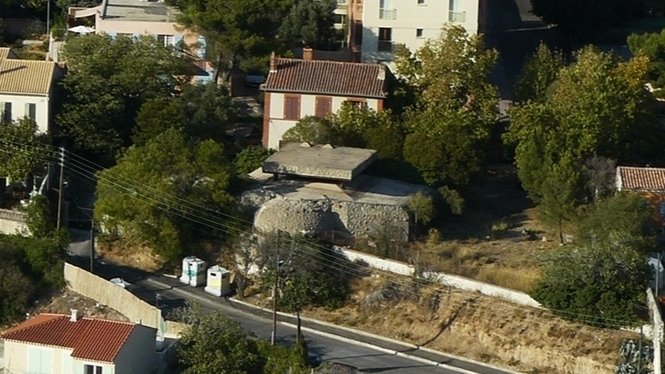
Depuis quelques mois une mobilisation s’organise autour de la sauvegarde d’un bunker de la batterie Fenouil à l’Estaque:
un témoin de ce patrimoine singulier que sont les fortifications militaires allemandes à Marseille mais aussi de l’histoire de la présence allemande et de la libération dont des épisodes importants se sont déroulés dans nos quartiers. Une demande de classement est en cours ainsi qu’une pétition.

Signez la pétition.


et en savoir plus ici.

Proposals for a heritage public policy for the right to heritage

On 8 August 2015, the National Assembly adopted the law concerning the new territorial organisation of the Republic, which in its article 103 requires that on each territory, the cultural rights of citizens be guaranteed by the joint exercise of the Competence in the field of culture by the state and the local authorities. The "guarantee" that the cultural rights of people will be everywhere, at any time, respected, is now a public responsibility of services as elected officials. They may refer, as a minimum, to article 27 of the Universal Declaration of Human Rights of 1948 (UDHR), an article which derives from the "right to cultural heritage" of the Faro Convention. Until then our co-operative has cooperated with the mayors who have voluntarily adhered to the principles of the Faro Convention (5 mayors since 2009), thus committing themselves to assume their responsibilities "in accordance with the right to cultural heritage". The French state has still not signed the Faro Convention and a thorough examination in view of its signature is currently underway (Parliamentary question 77255, June 2015). Today, section 103 of our law imposes an obligation that applies to all actions and actors of cultural policy. Since the adoption of a law is not an immediate translation into public policy, here is from the experience of Marseille and those encountered elsewhere, proposals for what could be a heritage public policy in favour of the right to Cultural heritage and which could be discussed, amended, reconsidered and experienced by a community. These proposals focus in particular on taking into account the "right to cultural heritage" as defined by the Faro Convention with regard to human rights, since cultural rights are much broader: Article 103 of the Law refers to Cultural rights set out in the Convention on the protection and promotion of the diversity of cultural expressions of 20 October 2005. So how do we move from the logic of the policy of "cultural offer" and "public" to that of listening to social demand? How can we encourage everyone to participate in public action in the process of identification, study, interpretation, protection, conservation and presentation of cultural heritage? How do we move from the designation of "beneficiary audiences" to the Citizen initiative? What public framework could be endowed with a "citizen Heritage factory"? What is the distribution of competences, responsibilities and actions in the field of cultural heritage between the state, local authorities and citizens? What possible cooperation? How can the public institution, which guarantees the general interest, also be a guarantor of cultural rights? The first proposal would be to create a public heritage service whose function would be to accompany the citizens, alone or in groups, in their work of identification, research, exhibition and conservation of the cultural heritages to which They value and wish, within the framework of public action, to maintain and transmit to future generations. Citizens would no longer only be "beneficiaries" of cultural heritage (public policy, cultural supply) but those who make heritage (integrated approach). The long experience of the European Integrated Heritage Mission allowed a heritage curator to experience this new heritage public service from 1995 to 2013. The mission, which has unfortunately not been maintained following its retirement, has led to civil society initiatives that are pursuing part of its functions as the "resource Centre" anchors dedicated to the history and memories of Migrations or the Northern Hotel centipede which is a "story factory". The second proposal concerns the heritage data. Although the public institution is active on the inventory of cultural heritages, their digitisation and accessibility through, inter alia, new digital cultural services, the numerous data collected by the heritage communities enter , they rarely in the public domain often fail even to try, see to opt for publication media independent of the institutional control like Wikipedia. How can these processes, both public and civil, contribute to co-defining the conditions and protocols for the cooperation of heritage communities in the process of inventorying and putting into circulation of heritage data (commenting, collecting, Complete, re-create, share, interpret, mediate, value)?. The latest European opinion "the local and regional dimension of the sharing economy" promotes the consolidation of "collaborative institutional ecosystems" with citizen initiatives that respect the principles of transparency, openness and Responsibility. The third is to experiment with public regulation of "cultural Commons" which could be inspired by the Italian experience of the laboratory for the governance of LabGov common goods. It experiments and disseminates a model of "settlement of Urban Commons" adopted in just two years by some sixty Italian cities and in short of adoption by 80 news including Rome. It allows a community to pass a "collaboration pact" with citizens so that they can take care (protection, preservation, maintenance) of tangible or intangible common goods, public or private for public use, and collaborate in their management, Renovation, transformation or innovation. These urban commons can be public spaces such as squares or gardens, buildings or services such as sports, cultural, social, etc. The waterfall of Aygalades, the Carmelite cave, the Oppidum of Varma, Atower of which heritage communities and local elected representatives are long-term mobilizers, could benefit on an experimental basis from such an experiment. The fourth relates to the establishment of a process of public consultation in heritage. The mayors signatory of Faro have posed as the first act the establishment of a "Heritage commission" bringing together the heritage communities active for ensemble to focus on the issues related to cultural heritages. This experience, which today is the subject of a "Free application of Faro" disseminated by the Council of Europe, could be further formalised by relying in particular on the French experience of the development councils. Heritage communities would thus be recognized in their function of interrogation and preparation of public decisions relating to cultural heritages (urbanism, cultural policy, social action, economic development, etc.). They could, in the context of public action, be able to participate in organising local consultation, carrying out the diagnosis as well as evaluation and being a force for proposal and warning. Their role would be equally important in the management of heritage conflicts (uses, interpretations, development, etc.) by facilitating the expression of heritage communities, economic and associative actors, elected officials and administrations. The last one concerns the setting up of an observatory on the taking into account of cultural rights. It would be useful, not in an evaluation function, but as an "alert" for the experiments implemented in particular concerning access to the right of all citizens, on the actual existence of an economic and social environment conducive to their Participation, respect for the diversity of interpretations as well as the integrity of the heritage, in short to maintain constant attention to all the recommendations emanating from the Faro Convention, Fruit of thirty year of European reflection. These proposals made in Primis to the members of the cooperative as to the local authorities and more generally to those who are interested in these issues condition the realization of our social object. Prosper Wanner, northern Hotel associate