
Des NEWS de Yannick Hascoet ! Une thèse à suivre !
»
bonjour à vous tous sociétaires et amis d’Hôtel du Nord,
Chers amis,
Après une longue période de «disparition », je me manifeste à nouveau, d’abord pour vous souhaiter (il n’est pas trop tard !) une bonne et heureuse année 2015…
Si l’année débute par des événements bien dramatiques, j’espère néanmoins et sincèrement qu’elle vous sera belle et que 2015 sera bénéfique au succès d’Hôtel du Nord !
De mon côté, je suis entré dans un stade nouveau de la thèse… Après avoir récolté un certain nombre d’informations (j’en profite pour vous remercier encore, vous tous dont l’aide et les encouragements me sont précieux) à Marseille bien sûr, mais également en banlieue parisienne et à Montréal, je m’attache à la rédaction à proprement parler.
J’ai aujourd’hui écris une cinquantaine de pages et attends le retour de mes directeurs de thèse sur ce premier jet. Ces pages, qui me semblent pouvoir constituer demain une partie, traitent du rapport d’un certain mode de découverte d’espaces socialement dévalorisés avec la science… En d’autres mots, je fais le constat, à partir des terrains marseillais, parisiens et montréalais, que certaines initiatives en premier chef Hôtel du Nord, renouent avec l’ambition didactique des voyages érudits tels qu’ils pouvaient être pratiqués autrefois. Je veux dire ici que moins qu’une attitude de contemplation, moins qu’une invitation au seul regard esthétique, une certaine offre actualise aujourd’hui à la frontière du domaine du tourisme et de la connaissance, un mode de découverte des territoires marqué du sceau du questionnement, de l’analyse patiente, de l’immersion.
De manière générale, je propose que ces offres – quelqu’un un jour à Marseille a parlé d’un « tourisme intelligent » – dialoguent avec des modalités de la découverte scientifique. Le cas de la découverte des cités d’habitat social est peut-être exemplaire à ce sujet : ainsi on y recherche un habitant susceptible de constituer un « informateur privilégié » (terme consacré par l’ethnologie), on y délivre un propos marqué de la critique sociale (qui a historiquement partie liée avec un courant de la sociologie dit « critique »), on y trace au final, une géographie « touristique » singulière qui n’est pas sans rappeler les lisières de la discipline géographique, je pense à la « psychogéographie » conduite sous la houlette de Guy Debord par les situationnistes dans les années 1960.
Voilà un résumé des questionnements du moment…
Pour être plus précis sur la forme, le cœur de la thèse sera adossé à des données rapportées de Marseille (« mon laboratoire de premier plan »), complétées par d’autres recueillies en banlieue parisienne (le 93 en premier lieu), et, enfin, le tout sera mis en perspective avec des observations effectuées à Montréal.
J’ai effectivement eu l’immense chance de pouvoir séjourner 3 mois cet été dans cette ville passionnante et rencontrer ainsi des gens très intéressants et d’ailleurs intéressés bien souvent par Hôtel du Nord (du côté du Centre d’Histoire de Montréal par exemple)… Je me suis concentré là-bas sur la mise en valeur de deux quartiers :
– Un quartier ouvrier sinistré par la désindustrialisation des activités portuaires, à l’est de Montréal (Hochelaga-Maisonneuve)
– Un ensemble HLM situé en plein centre-ville (les Habitations Jeanne-Mance).
Aujourd’hui tout ceci décante, j’alterne les moments d’écriture et d’analyse des matériaux les plus récents…
Voilà quelques nouvelles que je tenais vraiment à partager avec vous. Nous pourrons peut-être bientôt en discuter de vive-voix (je n’ai pas renoncé à venir vous saluer, seulement entre la thèse et la préparation des cours que je donne maintenant à Lyon, le temps manque !) Ce sera aussi enfin l’occasion pour moi d’intégrer « financièrement » et donc « officiellement » Hôtel du Nord (si cela est encore possible…).
En attendant, je souhaite que mon message soit transmis le plus largement possible et espère avoir de vos nouvelles bientôt. Et inutile de rappeler que vos commentaires/questions/mécontentements à propos de mon travail, sont les bienvenus !
Très bonne journée « .
Yannick ; Doctorant en géographie ; EVS-RIVES (ENTPE) ; Université de Lyon «
La Biennale Internationale des Arts du Cirque à la Gare Franche
En coréalisation avec la Biennale :
> RHIZIKON, compagnie Rhizome
Le mercredi 18 février à 15h
A partir de 10 ans
Entrée libre sur réservation auprès de la Gare Franche : 04 91 65 17 77

Rhizikon qui signifie en grec « rapport au risque » est une performance autour d’un tableau noir.
Le mouvement du dessin tracé à la craie relaie celui du corps, virgule enroulée au-dessus du vide.
Ces pleins et déliés interrogent les notions de mise en péril, de limites à repousser, de mise en danger.
Suspendue entre ciel et sol, l’interprète s’émancipe de ce cadre vertical, exalte la vie à l’aplomb du précipice
et joue avec l’attrait de la chute. Et la surface du tableau semble grandir démesurément, dans un vertigineux
renversement de proportions.
Et juste avant….
> REVOLT#1, compagnie ON-Orit Nevo
Le mercredi 28 janvier à 15h
Le vendredi 30 janvier à 17h
Le samedi 31 janvier à 14h et à 17h
A partir de 10 ans

Revolt # 1 est une exposition vivante, un espace de jeu sur le thème de la révolte et où la révolte se partage.
A l’intérieur d’arènes entourées d’écrans vidéo transparents, 6 artistes, 6 révoltes sont à prendre …ou à laisser.
Un moment de cirque interactif ou le public est invité à déambuler et ainsi à changer d’angle, de position,
de perspectives, à réagir pour se questionner et oser exprimer sa propre révolte.
> INSERT COIN, collectif La Grosse B
Les vendredi 6 et samedi 7 février, à 21h30
A partir de 7 ans
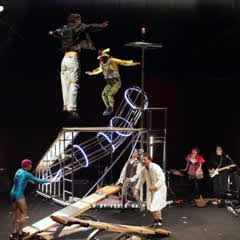
Insert Coin est une création rock’n’roll , une cour des miracles aérienne
qui prend la forme d’un jonglage d’êtres. Les artistes sont nourris à l’adrénaline, ils font preuve d’une énergie vertigineuse
et d’une envie insolente de jouer avec les risques et les limites de tout ordre, autour d’un objet mythique : le flipper.
Thème, objectifs, obstacles, autant de missions teintées d’humour cartoonesque, tantôt noir, tantôt absurde…
Communiqué de » Boudmer » : les prochaines sorties
– vendredi 23 janvier 2015 à 17h Pilotage
http://www.boudmer.org/
– mercredi 28 janvier 2015 sortie pêche de 9h à 13h
http://www.boudmer.org/Sortie-
– vendredi 30 janvier 2015 à 17h Pilotage
http://www.boudmer.org/
– samedi 31 janvier 2015 une sortie HISTOIRE DE LA PESTE
http://www.boudmer.org/L-
– dimanche 01 Février 2015 une sortie rando voile

– Tél. 04.91.91.15.86 – – Courriel: contact@boudmer.org – www.boudmer.org
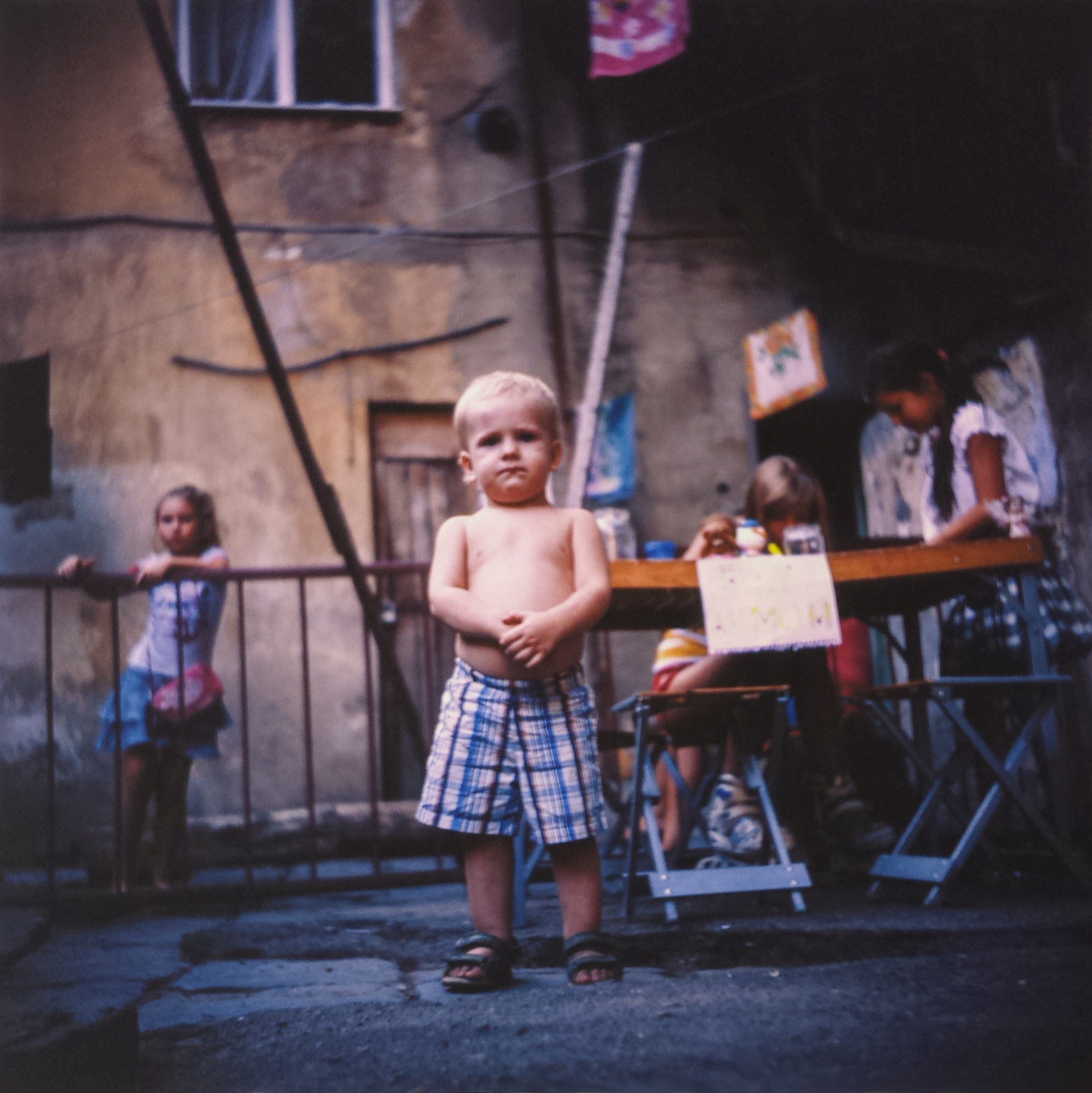
Matthieu Parent – Alexandre Sinelnikov , » Marseille Odessa – Regard(s) croisé(s) », une expo Photo à l’Alcazar.
A voir :
Du 16 Janvier au 14 Mars 2015
à L’ALCAZAR – Marseille
Marseille – Odessa . Regard(s) croisé(s)
Matthieu Parent – Alexandre Sinelnikov
En partenariat avec La Gare Franche où Alexandre Sinelnikov fut en résidence en Juin dernier.
Plongée aux origines profondes du quartier de St Antoine ( 13015)
Invitation :
Les 1000 Pattes de Saint Antoine
Jean Jouanaud – maître de conférences (retraité) – université Aix Marseille
Plongée aux origines profondes du quartier de Saint Antoine :
d’Antoine le Grand – Antonios megalos – premier ermite et moine en Egypte
au domaine rural des Antonins, un ordre hospitalier, à Marseille.
MMA Le Chalet – 20, rue Vert Clos – 13015 Marseille
Vendredi 16 Janvier 2015
en la vigile de Saint Antoine Le Grand
18h30 – 20 h
Entrée gratuite – Venez nombreux
MMA 20, rue Vert Clos – 13015 Marseille – 04 91 65 66 34
La Baguette Magique, on line. A suivre.
L’association 3.2.1 et la rédaction de La Baguette Magique vous présentent le projet du site « AWA NÄK edizioni-Insolite Impressioni », l’envie d’une maison d’édition atypique et pourquoi pas de la création d’une imprimerie coopérative par les acteurs d’un territoire et pour ceux ci.
awanakedizioni.wix.com/awanakedizioni

Council of Europe: Documents and videos of the Marseille Forum.
 The Council of Europe has put on-line on its website the working documents, conclusions and videos of the Marseille Forum on the social value of heritage for the Society of 12 and 13 September 2013.
- See the Marseille Forum page: http://www.coe.int/t/dg4/cultureheritage/heritage/identities/marseille_fr.asp
Several videos were made during the Forum by Tabasco Video:
- A video video clip of 4 minutes of presentation of the Forum: see the clip
- An 11-minute film that reverts to the questions, the unfolding and the conclusions of the Forum: watch the movie
- 11 Micro interviews of the members of the international panel: see Interviews
- Download the documents: program, work hypotheses, presentation of the walks, Conclusions, List of participants of the Panel.
Prosper Wanner: Some elements of the Northern hotel balance sheet in 2013
Places of hospitality in the inhabitant The balance sheet of the year 2013 is also that of the Nord Hotel, the opportunity to share some data, to briefly recall the process and to update the Co-operative project. Hotel du Nord is the first cooperative of inhabitants in Europe to apply the European principles laid down by the European Framework Convention on the value of cultural heritage for society, known as the Faro Convention. This Convention recognizes that everyone has the right to be involved in the cultural heritage of their choice as an aspect of the right to freely take part in cultural life, a right enshrined in the Universal Declaration of Human Rights of the nations United Nations (1948). It makes cultural and natural heritage a resource for a better framework and quality of life and for future generations. In Marseille, elected representatives, associations, citizens, artists and entrepreneurs did not wait for the Faro Convention to seize the European recommendations which the previous. Since 1995, they have been applied in the northern parts of the city. Gathered in "Heritage communities", they conduct research on their histories and heritage environment, supported until 2012 by a curator made available as part of a European integrated heritage mission. The results of this work regularly take place in publications, classifications, archiving, artistic creations, heritage walks, etc. The European Heritage days have become since 2005 the annual appointment of these heritage communities with the public and welcome several thousand visitors each year. With this mobilization, 8 heritage communities gathered in the 15/16 Heritage Commission, presided by the District Council, have imagined the Northern Hotel offering hospitality to Venetians on the occasion of the European Heritage days of 2009. En 2010 Marseille-Provence 2013 a co produced the pilot phase hosted by SCOP Place and then from 2011 the structuring phase in cooperative form to which the region, the Department and the foundations of France and Macif were associated. The Northern Hotel has joined the Faroes principles of the 2nd and 3rd arrondissements and the 13th and 14me arrondissement of Marseille and of the city.  For the year 2013 Marseille-Provence European Capital of Culture, the forty members of the cooperative has committed to all the four signatory municipalities of Faro, and unsustainable 50 hosts – associations, inhabitants, collectives, Companies-, have offered their hospitality in about forty rooms at the inhabitant and a hundred heritage walks to discover Marseille by its north, they have sold local works and products, have cooperated with institutions Cultural events such as Marseille-Provence 2013, the Belle de Mai wasteland and the Museum of Contemporary Art MAC and the Co-operative coordinated the Marseille Forum on the social value of heritage for the society in which some thirty euro countries participated Mediterranean at the invitation of the Heritage Communities, the 4 signatory councils of Faro, the European Commission, the Council of Europe and Marseille-Provence 2013.
  The hosts/inhabitants welcomed more than two thousand five hundred passengers in stays and walks. The local economic benefits were 10,000 euros per month: sale of nights, walks, books, etc. About forty articles and reports have been devoted to this hospitality. Today the Northern Hotel affirms itself as a cooperative of inhabitants who propose the hospitality and the discovery of the heritages of the districts of the rear port of Marseille in the form of guest rooms, urban walks and the sale of books and Local productions. Passengers greeted by guests come for touristic reasons (60%) or family, professional or health reasons (40%) Often longer stays. One third of the passengers being greeted are foreign. Its social object remains the economic valorisation of the patrimony of these districts in the interest of those who work there, stay and live and its frame of reference the Convention of Faro. Its activity is the identification and recognition of legal frameworks adapted to its new uses of heritage, such as the recognition of the right to hospitality in today's forbidden social habitat; The training and qualification of the hosts for these uses in a knowledge exchange logic (School of hosts); and the promotion of hospitality and the discovery of the heritages thus produced via its brand "Hotel du Nord" and its Internet platform Hoteldunord.coop: We produce what we sell. We sell what we produce. " At the end of 2013, the North Hotel has been recognized with the right to market the hospitality of its members without necessarily having to go through the travel agencies or to become one.
  Its means are an annual budget of 120,000 euros financed for two thirds by the sale of commercial services (sale of walks, programming, etc.) and for a third of public subsidies and sponsorship linked to the solidarity economy which must be added Significant non-monetary contributions from its members and partners. Two-thirds of this budget finances two salaried positions at the service of members and the Co-operative project. Its cooperative principles are the free, voluntary and open membership, the democratic power exercised by the members (one member, one vote), the control by the inhabitants (they are statutory majority and elect a supervisory board), The exchange of knowledge (School of hosts), common ownership of means (website, brand), non-profit, the imshareability of reservations (common good) and autonomy and independence. Its members are to date 43 of which according to its statutes, more than half are local hosts. A third of the members are legal entities (companies and associations [1]) and some non-host members support the cooperative venture. The horizon of the cooperative is "glocal": its historical horizon is the northern districts of Marseille which are its base and its origin. North Hotel has its headquarters. Its economic horizon is the metropolitan area of Marseille, an area of mutualisation of means indispensable to its economic equilibrium. Its political horizon is the Euro-Mediterranean, the space of reciprocity and networking with other citizens ' movements sharing its purposes. Imagined in 2009, tested in 2010, structured in 2011 and 2012 and promoted in 2013, today the cooperative continues its development and builds new alliances. The road has been traversed, on foot and in our heads, since the twenty nights sold in 2010 until the 1500 nights of 2013. The adventure remains fragile, imperfect just as exciting and collective.
Prosper Wanner, manager, January 2014.
[1] anchors, youth Marseille Nord, – Able, association for the city of Street Arts, departmental Association for the Development of prevention Actions 13, Boud'mer, Euromed Council, Joint editions, Geosmine, Goelen, HÖFN, Radio Grenouille, SAFI, horseshoe soap and Koleg Cosmos
[1] anchors, youth Marseille Nord, – Able, association for the city of Street Arts, departmental Association for the Development of prevention Actions 13, Boud'mer, Euromed Council, Joint editions, Geosmine, Goelen, HÖFN, Radio Grenouille, SAFI, horseshoe soap and Koleg Cosmos
Coordination patrimoine et Creations 2/3: The port of Joliette or the narrative of the port heritage and the neighbourhoods that border it.
 The Coordination of patrimony and creations 2/3 and the association in Italic return to the tour of Faro which they took charge for LeForum of Marseille on Thursday 12 September 2013: The port of Joliette or the narrative of the Port heritage and the districts That borders it. It should be stated in the preamble that this text brings together the views of several members of the Coordination Patrimoine and creations of the 2e-3earrondissements de Marseille who participated in the animation of the tour of 12 September 2013, during the Forum of Marseille on the Social value of the heritage and the value of the heritage for the society. Instead of a narrative written by a single author, we prefer to propose to the reader, several glances and so many stories on our itinerary, simply because it is also our differences that base the actions of the group, inhabitants and Professionals, which we have been training since 2011 and which remains as much concerned with history as by the news of our neighbourhoods. This trip, originally entitled "In the reverse of time, from the City of tomorrow to the ancient city" then "the port of Joliette or the narrative of the port heritage and the neighbourhoods that border it" was driven by the Coordination of Heritage and creations 2nd-3rd E T the association in italics.
  Laurent Cuccurullo, association in italics (13002). www.enitalique.fr in view of the route taken, from the forecourt of the Archives and departmental library of Bouches-du-Rhône, to the town hall of the 2nd sector, it is quite easy to notice the works in progress, like the new constructions. The multiplicity of actors involved is a clear sign of the stakes of the urban mutation that is being exercised here. Among other things, Euroméditerranée (EPA, public development institution), the Great Seaport (EPIC, public industrial and commercial establishment), Marseille-Provence 2013 (Association loi 1901 which brings together communities and Private partners whose board of directors is chaired by the President of the Chamber of Commerce and Industry Marseille-Provence) or many real estate developers. For in italics this ride is therefore placed immediately under several signs. It is not only a question of naming the long history of Marseille, even when it repeats itself (from Jules mires to Euroméditerranée), but also to point out the evolution of the relations between the city, the port and the sea since our itinerary which never goes away Really from the shore does not allow us to access it either. Much more than a simple Marseille paradox, this confiscation of space seems to me to be indicative of what was common heritage here. To walk between the old and the "new" port, which is at the origin of the creation of these districts, is necessarily to underline this conflicting value of heritage. In addition, since it seems necessary to us, this stroll was a construction of all parts that would allow us to report what is heritage (according to us) and describe how we act as "patrimonialisateurs", in a Context of specific realization and to the attention of local actors, representatives of the 21 Member States of the Council of Europe who signed the framework Convention of Faro, the other interested countries and representatives of the various directorates of the Council of Europe and the European Commission. Because we think that a stroll is also meetings, our walk was punctuated by the steps and sensitivity of several members of the CPC. It begins on the forecourt of the departmental lending library, with the words of Brigitte Corbel, CPC member and head of the BDP news room. His intervention is important to us because it demonstrates the quality of the bridges we have woven with the departmental institution. At the Place de la Joliette, we spoke with Yvette, a resident of La Villette (13003), of the hotel "Les gens de mer". One way as another to bring us closer to the shore (inaccessible) and to say the impact of port activity on the uses of this territory. The first marine foci were created as early as 1900. The last two world conflicts will begin to deteriorate and eventually destroy a large part of these homes. After 1945, the maritime sector evolves and it becomes necessary, in the face of the needs expressed, to rebuild structures. En 1946 is created the A.G.I.S.M. (Association for the Management of maritime social institutions) that will set up "the Houses of seafarers" in order to welcome people in relation to the maritime environment, i.e. the sailors of trade, fishing and their families, that of Mars Eh was inaugurated on 24 September 1953 by Mr. Mamacony, Secretary of State for the Merchant Navy. From 1990 the marine sector is evolving strongly. The number of seamen and the length of stopovers are rapidly declining. The commercial structures of seafarers ' homes are less frequented and thus in 1999, it is decided to open these establishments to the general public. These hotels are certified in two stars and are now called "hotels les gens de la mer". They are not out of focus but located in the heart of the cities near their port. You can sleep in large boat cabins and enjoy seafood… Within the hotel, the Seafarers ' Welcoming association, the Seamen's club. Al
 ain, living in the district of La Belle de Mai (13003) and Francis, living in the Quartier La Villette (13003). During stations at the docks of Joliette and Mazenod Street, we mentioned the large Marseille-based shipping companies that flourished during the nineteenth and twentieth centuries thanks to the invention of the steam engine and the propeller. In the perimeter of the port of La Joliette, many converted (and often already forgotten) buildings allow to evoke this auspicious period of port activities at the time of the French colonial empire. In 2012, we created "the ride in good shipping Company" to evoke this period that remains in the memory of the Marseille, especially since many alumni of the 2nd arrondissement have worked in these companies. In the course of its elaboration, we have established links with the management of the docks (formerly called "The Big Warehouse") and especially with the staff of the workshops of mechanics, electricity, welding… of the National Society Corse Méditerranée (SNCM) which are located in a former storage building of the postal parcels of the transatlantic general Cie, now extinct. It is thus, in particular, that the head of the cargo at the SNCM, has taken over, as part of our Heritage Walk, the visit of the headquarters of the SNCM, Bd des Dames, a magnificent building whose interior is in the Art Deco style. He also presented the history and difficulties of the SNCM, which has the specific function of ensuring the territorial continuity between the mainland (from Marseille) and Corsica. »
 End of our stroll with Dominique, a resident of the Joliette District (13002) and writer associated with the Atelier EuroMéditerranée "Tabula Rasa – the shopping district: 1943-2013". Quartierslibres23.blogspot.fr Traces, memories and history the walks are always the pretext to share our dreams and fantasies. Instead of rushing to the destination, we finally take the time to lift our noses and let our eyes wander. A strange poetry of desolation emanates from these wastelands which carry in them the working memory. We imagine the smoke, the vapors and the crash, the swarming of the crowd and the tumult of the street, the machines and the smell of diesel, the heat and the fatigue, the laughter of the children in the courtyard of the school, a whole overflow of activity. And we imagine that a beautiful day life was no longer punctuated by the howling of the sirens, that suddenly the din ceased, that silence invaded the abandoned workshops and the deserted streets and that finally the workers, the employees, the craftsmen and the traders are Left, leaving some survivors to drown in their memories. We guess this suffering because we see these things unseen with our hearts. We can imagine that under the highway bridges Nature will regain its rights and return to the wild but, deep down, we know well that it is impossible. The walls of factories and facades are spaces that keep traces of lives lived and buried. After the silence of industrial mourning, these fragile layers of memories crumble under the effect of backhoes and cranes that disturb the landscapes, but there are still bits and pieces. So just learn to read these shreds of human wear. Hikers turn into archaeologists and actually observe a neighborhood that changes skin. This conversion does not erase the above. It simply fits in with continuity. However, we are sensing a danger. Clinging to a beautiful coastline, we guess that these wastelands arouse many desires and that investors obviously prefer to forget that this historical thickness is an anchor that would facilitate the integration and the mutations Social. Citizens have to remind them of that. It is that with these walks, we find ourselves between history and memories. The memory installs the speech in the sacred, explained Pierre Nora, the history in débusquerait. History only focuses on temporal continuity, evolution and the relationship of things. The memory is rooted in the concrete, in the space, the gesture, the image and the object. Memory is an absolute and history knows only relative. All these factories and offices are buildings where identities, urban models, circulations have been forged, but also ways of thinking, living and entertaining. They gave birth to solidarity and it is no coincidence that they are disappearing today. The major difference between history and memory lies in the type of questioning addressed to the past. We are no longer talking about historical knowledge from which we could assess the memory. The story is forced to open up to other objects. As Ahmed Bodsworth points out, the link between collective memory and national memory is precisely questioned by overflows in the public sphere, which make other narratives, falling under clandestine memories, find place on the media scene and cultural. And the emergence of this plural memory implies the need for a critical revision of the great national narrative…
Who are we? Inhabitants, users and professionals, simply actors of the 2nd and 3rd arrondissements of the city of Marseille who consider the natural and cultural heritages of this territory as a living resource and a founding citizen of any process of Sustainable development. Our walks, our workshops, our discussions as all of our appointments throughout the year, are open to everyone! To follow our news or to join us, only one address:p atrimoinesetcreations23.blogspot.fr to download in PDF the card of the trip published on the occasion of the Forum of Marseille: http://hoteldunord.coop/wp-content/uploads/2013/09/balade-1-joliette.pdf