A lire ici :


Fabrique d'histoires

Cette année encore Hôtel du nord vous invite à partager l’hospitalité, les recherches et les découvertes effectuées tout au long de l’année par des habitants engagés à pleinement habiter et rencontrer leur territoire.
5 balades mais aussi des expos, du cinéma, de la musique pour explorer collectivement différents quartiers des 15ème et 16ème arrondissements.
L’accès à l’ensemble des propositions est libre mais les balades nécessitent de s’inscrire, alors ne tardez pas!
Du côté de L’Estaque
Vendredi 15 septembre à 9h30, Balade Saumaty Port
Du côté de Saint Louis
Samedi 16 et Dimanche 17 septembre toute la journée: Un week end à Saint Louis!
Samedi à 14h30, Balade De St Louis à Campagne Lévèque
Samedi à 14h30, Exposition photographique « le Boxing-club »
Samedi à 15h, Visite de l’Eglise St Louis (sans inscription)
Samedi à 19h, Projection Cinéma « Je t’ai dans la peau » de JP Thorn
Dimanche à 9h30, Balade La cité jardin / Concert Fanfare des Familles/ Expo photo à la Cité St Louis
Dimanche à 15h, Visite de l’Eglise St Louis (sans inscription)
Du côté des Aygalades
Samedi de 11h à 18h, Quartier portes ouvertes à la Visitation et aux Aygalades
Du côté de la Savine
Dimanche à 14h30, Balade De Savine en collines
Et l’ensemble de la programmation d’automne de balades à télécharger, c’est ici. Toutes les balades ici.
Nous vous souhaitons de belles aventures pédestres…


One last match before maybe put some side of the screens…:)? For those who were not present here are some links with photos from Sunday to ForestA of June 4: © Lisa George © Dominique Poulain © Estelle Pierson it was a beautiful day on many aspects (of the world, a beautiful mix of people, owls workshops around the slopes of the project, a sense of calm and generous space, astonishment, great poetic moments, conversation…). It also validated by experience the location of the hamlet, which is confirmed to be a central and protected place. We were in the end more than 150 to contribute, to carry, to animate the content proposed that day, and the richness of the day was encouraging for everyone. A friendly moment of balance was also held on 3 July so that all "contributors" (whether individual inhabitants or associations) can tell and analyse in their own way the day, the meetings, the exchanges. Another important time was the meeting with the institutional partners, gathered for the first time on the ground on 30 June. There too the exchanges were very positive. It seems that the transversality of the project (between environment, culture, local development, social…) and its way of advancing in process (path doing) is now well understood and even appreciated! The major decisions in particular for the possibility of the hamlet and its shared tools are nevertheless subject to the finalisation of the agreement between Yes we camp and the proprietor Resiliance and to the arbitration of the European Fund (ERDF) which will only occur in December or January. So by then… Development side: in parallel with the continuation of the technical and regulatory instructions (networks, Convention…), it is hoped to be able to bring the water this autumn to start at the cost of the farm and initiate the arrival of the first inhabitants-animals ( donkeys, goats, bees, low Court). This would also mean a first home module and the permanent installation of a first inhabitant-human:). Side uses of places: we dig the grooves while remaining open and imaginative on what shapes it can take! Since June 2016 we have collectively established a number of core and thematic values for the overall project. This year most thematic trails have been experimented in one way or another and one of them, the wild Botany (exploration and invention from the plants present), has become an axis of activity structured under the name Jardiner the Hill, initiated by the Safi collective with the Espigaou Association and now carried by a whole group of people and associations. Garden the Hill will be resumed at the end of September with botanical walks, the care of wild plots and a small evolution of the weaving project. For the other "furrows", the idea would be to form small groups that could from the first experiments of this year gradually emerge programmes or actions, brought to several. • Memory and stories/sharing and site visit: to shape the memory of the places and the stories of what we live in the project to name, share, Orient, be hospitable? • Oven/bread/clay: the construction of ovens, the exploration of culinary cooking and the rediscovery of clay as collective itinerant practices in neighbourhoods? • Motorcycle and mechanics: inventing modes of encounter and shifted proposals to provoke a situation of constructive discussion with motorcyclists? • Local communication: communication as an action that participates in the networking, the sharing of expression, the appropriation? And for the sport and the body we would like to continue to invite local associations to test the places while continuing informally to associate the users (sportsmen and walkers/pedestrians are to this day the most numerous users). We also plan to propose in the autumn a workshop on governance and still experiments not planned because it goes with the meeting. Until we translate all this into various and varied invitations, enjoy the mellow summer!

Il débarque à Marseille et plus exactement à la Cité des Arts de la Rue. Durant 3 jours, les 15, 16, 17 juillet 2017, la Cité des Arts de la Rue se transforme pour accueillir le Fermes d’Avenir Tour, un événement festif en 30 étapes, dédié à l’agroécologie et la permaculture, pour favoriser l’émergence, l’impact et la viabilité des solutions alternatives.
Le thème de cette étape marseillaise est l’agriculture urbaine. L’agroécologie viendra ici relier la gastronomie à l’art, les animaux au béton et les légumes pousseront à l’intérieur… Pour prouver que l’agroécologie est non seulement possible, mais nécessaire et désirable, et mettre en lumière, en fête et en guinguette la permaculture, hydroponie, les lombricomposteurs, l’agroforesterie…
Ateliers, projections, débats, spectacles, concerts, balades, visites, camping, marché de producteurs, dégustation de vin naturel… tout un programme au jour le jour à découvrir là !
A noter les deux balades proposées par Hôtel du Nord et le Bureau des Guides du GR2013 avec Julie de Muer, au départ de la Cité des Arts de la Rue, dimanche 16 jusqu’à La Gare Franche et lundi 17 jusqu’à Foresta.
3 journées festives pour apprendre, comprendre, échanger et construire demain…

Artmacadam sera à Ensuès la Redonne les 30 et 1er juillet. Accueilli chez Nathalie Chappe le collectif présentera 4 représentations d’Ose C Lavie, une pièce qui se déploie dans la maison, tandis que le jardin s’égaye d’une expo des photos de Nathalie Chappe et des dessins de Michel Bourgois … de tables et de chaises pour profiter de la fraicheur du jardin avant ou après le spectacle.
C’est un coup double imaginé par Nathalie Chappe et Florence Morel, toutes deux sociétaires de la coopérative Hôtel du Nord, le temps d’un week-end à Ensuès la Redonne.
Nathalie et Bernard ouvrent leur jardin devenu salle d’expo avec les travaux photographiques de Nathalie et les dessins de Michel Bourgois.
Florence Morel et la compagnie ARTMACADAM, collectif de danseurs et de comédiens, quant à eux transformeront toute la maison en scène, pour 4 représentations de « Ose C Lavie ».
« Ose C Lavie » un clin d’œil à Rrose Sélavy, personnage fictionnel de Marcel Duchamp, est un théâtre d’images animées, des bouts de vie qui se croisent, se mêlent, dialoguent avec votre imaginaire, vos perceptions, sensations.
Elle est une expérience subjective à partager.
Vous êtes invité à écrire votre propre histoire au gré de votre déambulation.
Cette pièce a été créée en réponse à un questionnement sur l’identité sur les masques identitaires que nous construisons, cumulons tout au long de nos vies pour faire avec l’Autre.
Parfois, ils se fissurent et laissent apparaître à notre insu, d’autres masques plus archaïques.
C’est ce moment d’équilibre avant la chute du masque qu’Ose C Lavie tente de révéler avec vous….
ARTMACADAM

Intrépide explorateur, l’homme a, de tout temps et par tous les moyens, cherché à découvrir ce que recèle le monde de la mer. D’abord sur l’eau avec les bateaux, puis sous l’eau avec l’invention des scaphandres et des sous-marins. C’est essentiellement de ces derniers dont il s’agit avec cette balade-visite à L’Estaque. Depuis l’Espace Mistral, une première visite s’impose à l’écomusée du Syndicat des Initiatives pour une présentation de l’archéologie sous-marine et l’implantation du DRASSM à Marseille. Puis l’Espace SAGA, qui abrite le plus grand sous-marin civil du monde, nous ouvrira exceptionnellement ses portes. Initié par le commandant Cousteau, repris et construit par la Comex en GIE avec l’Ifremer, mis à eau en 1987, le Saga est depuis 1991 dans un hangar. Nous y apprendrons également les histoires des machines à plonger par une exposition commentée, des film et des photos.
C’est notre dernière balade de la saison, rendez-vous pour les Journées Européennes du Patrimoine en septembre 2017.
It was Sunday, June 4, 2017. The site of ForestA was ready to welcome small and large from 9am until long after dusk: workshops discoveries, walks, performances, concert, Cine, a great festive day! The complete program and the photo report of the day seen by Dominique Poulain: a t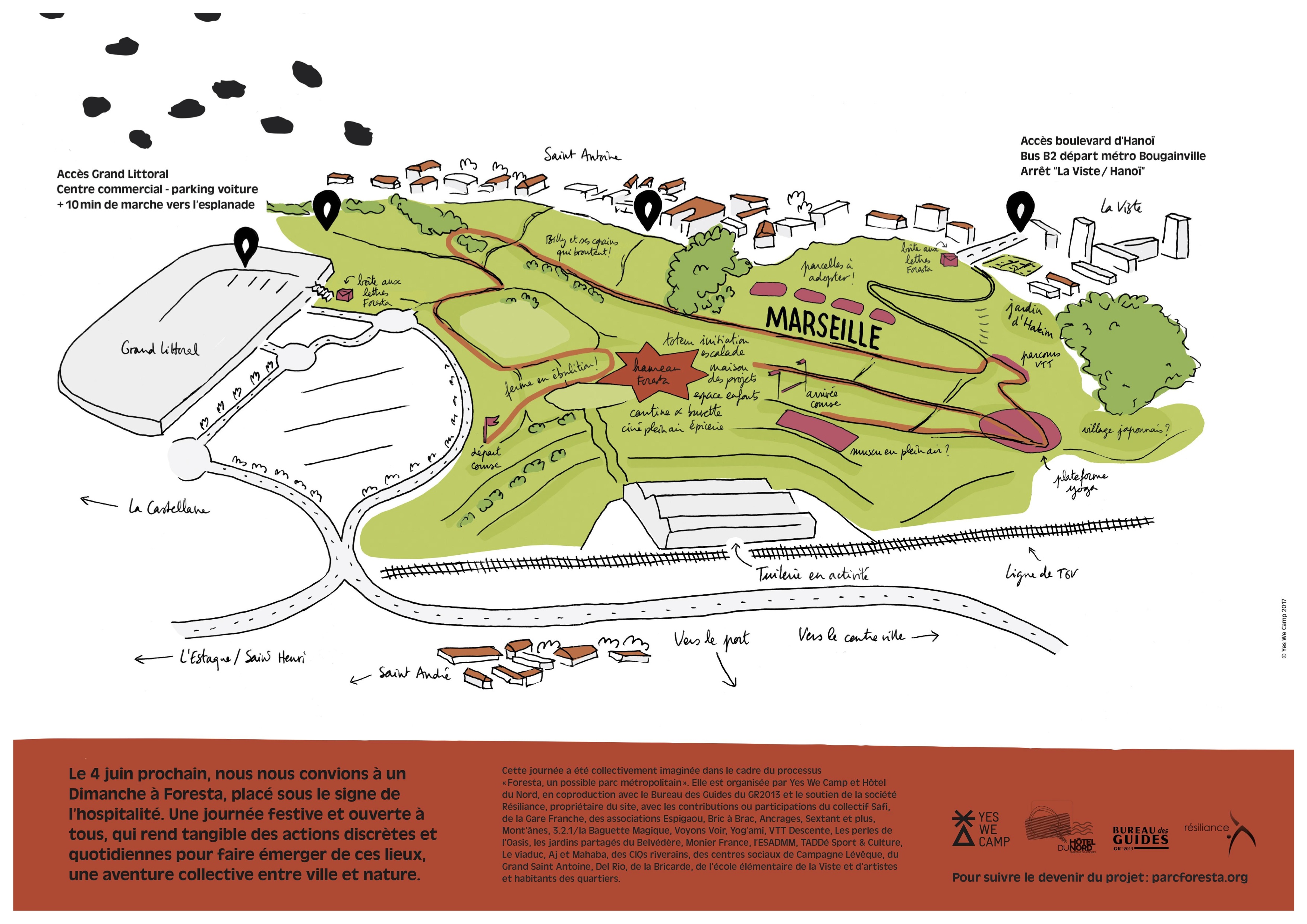
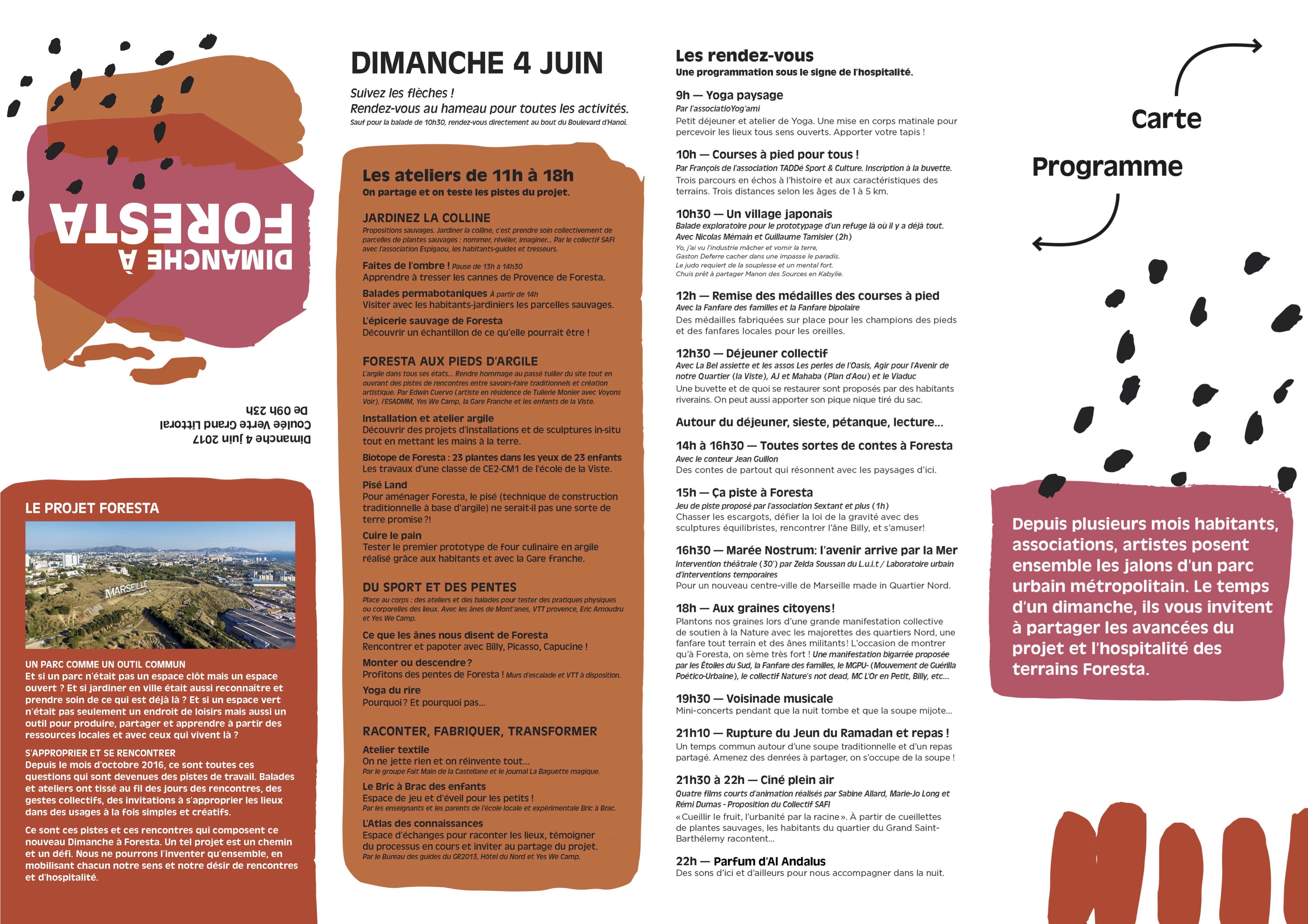 iny glimpse of the pictures below, they are all gathered in this album to flip through.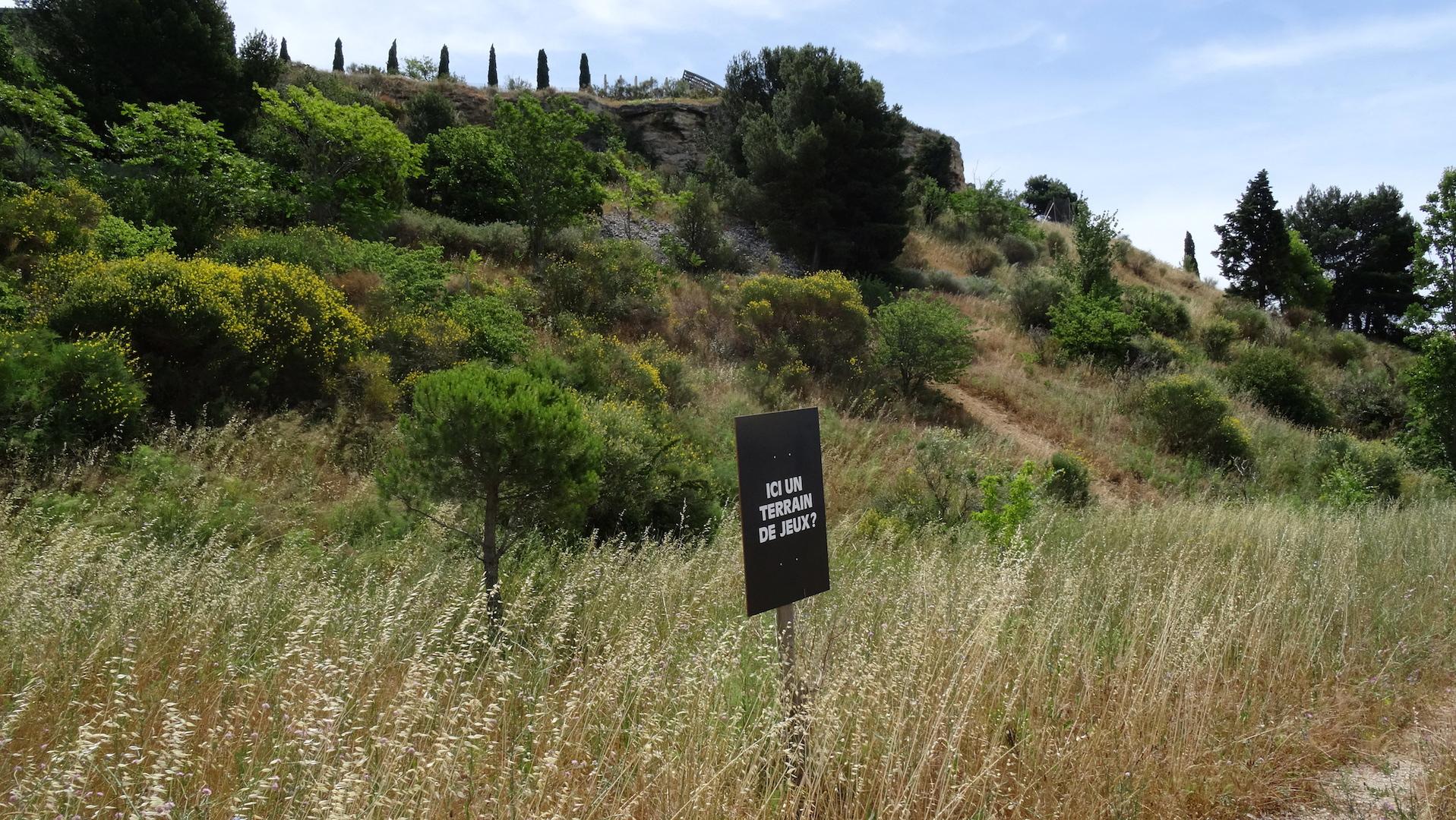


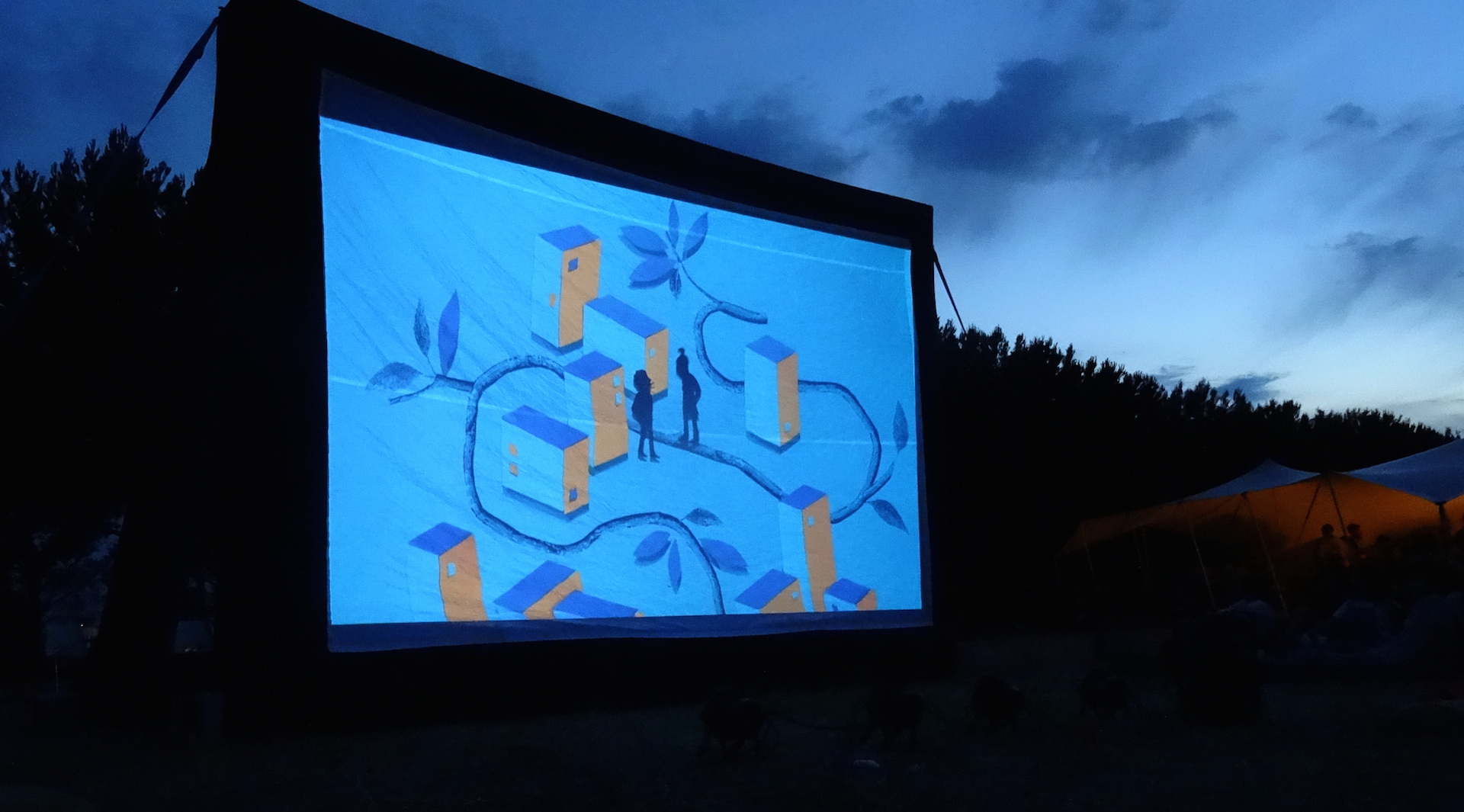
Finally we were able to manufacture the first oven on Saturday thanks to the Gare Franche and Amora! While we are in full preparation from Sunday to ForestA of June 4 (the program arrives…), guy-neighbor of the Viste and accomplice since the first encounters-, lent himself to the play of the narrative and we thank him. See you soon, maybe a Sunday:)! Construction of a traditional Cob Oven acknowledgements: • La Tuilerie Monier, which supplied the clay bags graciously • Catherine, Dominique, Zohra for hosting us at the Gare Franche • Amora, her family, her friends and neighbors of the plan D'aou for their valuable experience • Elise • Dominique • Marion • Hakim • Julie • Josiane •… and many others with unknown names 3 indispensable elements • clay • straw • water some will add elbow oil (feet and hands)… 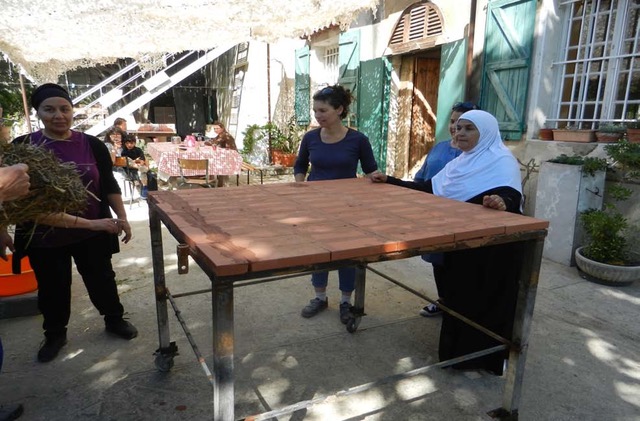

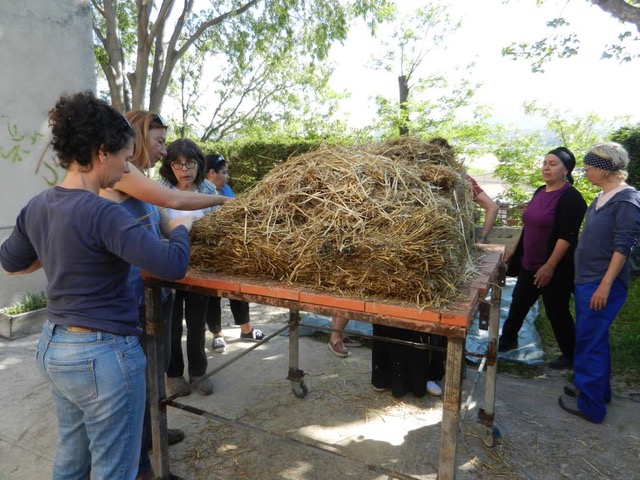 The oven base, already made, is an Assembly of terracotta briquettes, installed in height on a rolling table to facilitate a better movement. Straw is piled on the base to mount a pyramid, compress and round at best, which will serve as a template for the final form of the furnace.
  In a large gamate, the clay is poured, which will be mixed with straw (before or after watering). A good amount of water is required for this mixture to become a more solid and sticky (COB) texture.
 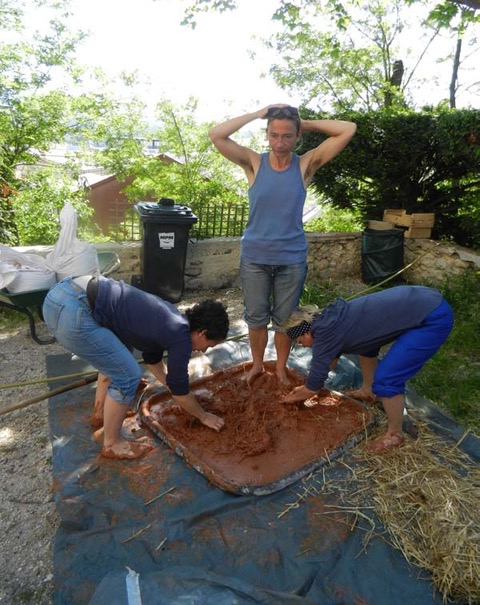 To obtain this homogeneous mixture, 2 methods: • at the feet, as practiced in the Magh
 reb countries • by hand, to better feel
 the consistency from the base on the belt the cob straw, floor by floor, remembering to leave several oven openings: • the door on the main
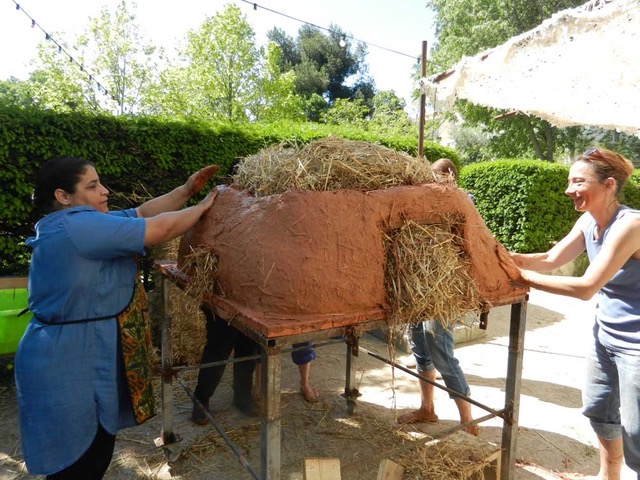 side • Windows on each of the remaining 3 sides to monitor the cooking (or even allow better ventila
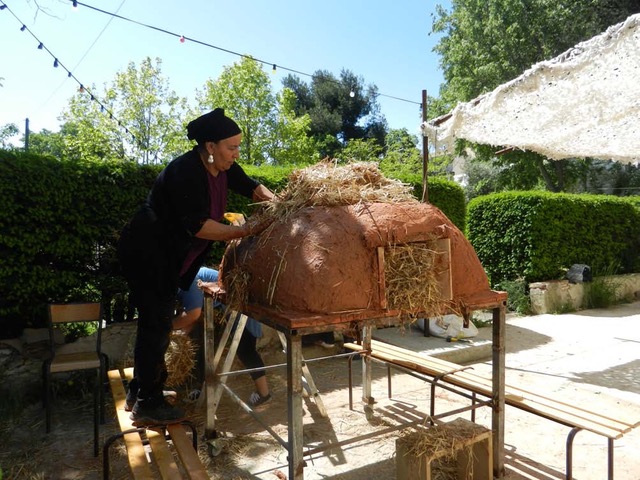 tion) 3 wooden wedges are installed to better support the access door, which is useless for Fe smaller area. The oven walls are also wet for a better adhesion of all the assembled elements of the cob.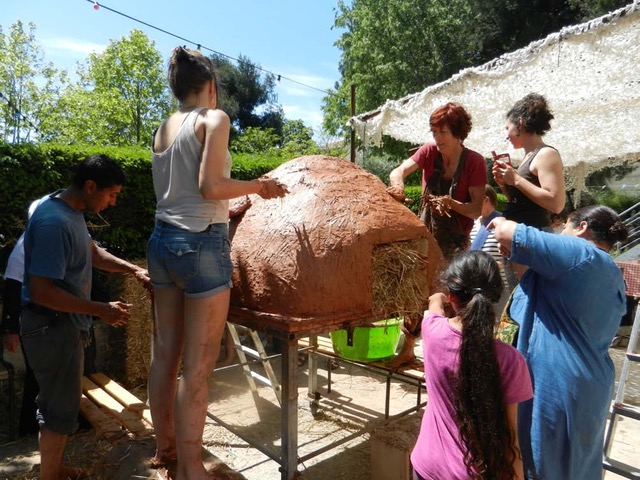
 You don't forget to leave a final opening on the top, like a chimney. It will be necessary to wait at least one week of drying for the commissioning of the oven, the straw and the wood are burned definitively during this operation.
  There you go!

Rendez-vous Gare Saint-Charles ! Nous la connaissons tous pour la parcourir en vitesse, en retard, en attente, entre deux… Gérard Planchenault propose de s’y arrêter le temps d’un voyage historique, politique et technologique et abordera :
– Sa naissance en 1848, son aile Narvik toujours debout, sa halle historique de 1890 et ses escaliers monumentaux de 1927, l’après-guerre en 1953, le projet fou des 30 Glorieuses, la nouvelle gare de 2007, la future gare souterraine de 2030 (début des études en 2017, début des travaux en 2022).
– L’histoire de l’architecture depuis les premières structures en pierre, puis en métal riveté, enfin le début du béton armé, l’apparition de l’électricité et du téléphone.
– L’histoire de la pensée politique à travers les représentations de l’escalier monumental : depuis la philosophie du bon sauvage, l’expansion coloniale, jusqu’à notre idéal républicain d’aujourd’hui.
Une balade dans la gare, au frais ! inscription ICI.
Gérard Planchenault a écrit : « Marseille Saint-Charles – Histoire d’une grande gare – 1847-2007 » – Alan Sutton Editions, paru en décembre 2008.

Le Vallon des Mayans est dissimulé entre l’hôpital Nord et les collines. On y découvre des vestiges industriels – bien sûr, à Marseille ! – et même archéologiques. Encore visible par les « oppida », ce passé celte a été longtemps occulté dans les représentations collectives, alors que plusieurs de ces villages gaulois subsistent et qu’ils sont même presque les seuls «monuments historiques» classés dans les quartiers nord de la ville.
Le vallon abrite aussi un patrimoine naturel exceptionnel, pour le plus grand bonheur des abeilles qui y trouvent un terrain propice au butinage. Une cartographie gustative enrichie par la visite de la miellerie d’Agnès et Louis, apiculteurs, suivie d’une dégustation de leurs miels.
Type de balade : balade urbaine, champêtre en bordure de ville, accueil chez l’habitant.
Thématique(s) ou notions abordée(s) : lectures paysages, archéologie, habitats, patrimoines naturel et culinaire.
Sites, monuments, lieux visités : Vallon des Mayans, oppidum, miellerie.
Secteur géographique : Les Mayans, Marseille 15
Particularités : balade suivie d’un pique-nique tiré du sac.
Cette balade est inscrite aux Journées Nationales de l’Archéologie 2017, elle est gratuite, mais il faut s’inscrire ICI.